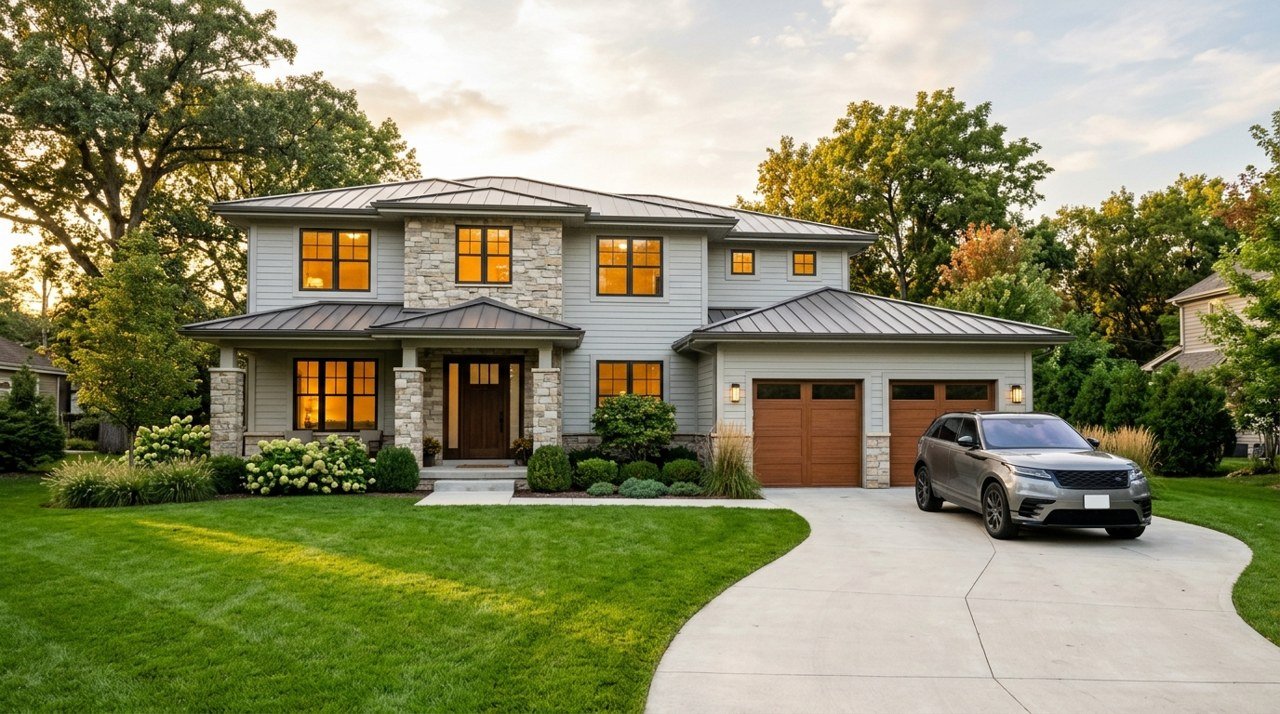
Car & Home Insurance Bundling in 2026: Combining auto and homeowners (or condo/renters) insurance with one carrier typically unlocks a 10% to 25% multi-policy discount — saving roughly $450 to $950 per year on average. However, in high-catastrophe states like Florida, California, or Texas, unbundling (pairing a regional home insurer with a separate national auto carrier) sometimes beats bundled quotes by $500+.
Typical Bundling Discounts by Carrier Profile (2026)
| Insurer Category | Typical Multi-Policy Discount | Strongest Advantage | Watch Out For |
|---|---|---|---|
| National Mutuals (State Farm, Amica, USAA) | 15% – 25% | Single-deductible storm perk & smoother umbrella setup | Home rates can spike in hail/wildfire ZIPs |
| Direct / Independent Carriers (Progressive, Travelers, Safeco) | 10% – 20% | Independent agents shop 10+ home carriers at once | Verify replacement cost vs actual cash value roof terms |
| Unbundled Split (Separate Auto + Regional Home) | 0% bundle (lower base rates) | Avoids carrier-wide home rate surcharges in coastal states | Requires coordinating underlying limits for Umbrella policy |
4 Checklist Items Before Switching Your Car & Home Bundle
- Match Liability & Deductible Limits Exactly: Never compare a $100k/$300k auto quote against a state-minimum quote. Aim for at least $250,000/$500,000 bodily injury and $100,000 property damage on auto, plus Replacement Cost Value (RCV) on both your home structure and roof.
- Watch Out for “Actual Cash Value” (ACV) Roof Endorsements: Many carriers quietly switch roofs over 10–15 years old to ACV payouts or 2% wind/hail deductibles to make bundled quotes look artificially cheap.
- Ask About Single-Event Deductible Waivers: Some premium bundles waive your auto comprehensive deductible if the same hailstorm or fallen tree damages both your house and parked car.
- Re-Shop Every 2–3 Years: Carriers frequently raise renewal rates 12%–20% after year two once new-customer teaser credits roll off.
Frequently Asked Questions
Is it always cheaper to bundle car and home insurance?
No. While bundling wins in roughly 70% of suburban ZIP codes, homeowners with a recent teen driver, speeding tickets, or high wildfire/hail exposure should always price both bundled and unbundled quotes through an independent broker before assuming a bundle is cheapest.
How Bundling Unlocks Cheaper Umbrella Liability
If you carry a $1M–$2M Personal Umbrella Policy to protect your home equity and retirement accounts, keeping both your auto and homeowners policies with the same A-rated insurer eliminates underlying-limit gaps and typically cuts umbrella pricing to $180–$300/year. Always verify that your auto policy carries at least 250/500/100 liability and your homeowners policy carries $300,000–$500,000 personal liability so there is zero gap before the umbrella coverage kicks in.
How Credit-Based Insurance Scores Affect Bundled Quotes
In most states (except California, Hawaii, Massachusetts, and Michigan), insurers use credit-based insurance scores alongside driving history and CLUE claims reports to price both auto and homeowners policies—meaning paying down revolving credit card balances can lower renewal premiums across both policies at once. Also ask your agent about telematics safe-driver apps, paid-in-full discounts, and paperless billing credits that stack another 5% to 12% savings on top of your bundle, and always review state-required uninsured motorist limits before finalizing coverage so a single severe accident never leaves you exposed to out-of-pocket medical or legal bills.
How Much Bundling Car and Home Insurance Actually Saves in 2026
Insurer ads routinely promise up to 25% off when you bundle auto and homeowners policies, yet the real savings rarely apply equally across both bills. In 2026, most national carriers apply a multi-policy discount of 15% to 20% on the homeowners policy and 5% to 12% on the auto policy, yielding a blended net reduction of roughly 10% to 18% on combined premiums. Because home insurance rates in hail-, wildfire-, and hurricane-exposed ZIP codes have risen sharply, bundling is not automatically cheaper than splitting policies between two specialized carriers.
Side-by-Side Bundle vs. Split-Carrier Math
Consider a two-driver household shopping in 2026 with clean driving records and a $380,000 home replacement value:
- Carrier A (Unbundled Quotes): Standalone auto at $2,100/year plus standalone home at $2,600/year = $4,700/year.
- Carrier A (Bundled): Applying an 8% auto discount (-$168) and an 18% home discount (-$468) trims total cost by $636/year to $4,064/year—a real 13.5% overall savings.
- Split Strategy (Carrier B Auto + Regional Carrier C Home): If a regional mutual insurer quotes the exact same home coverage at $2,050/year and a direct auto insurer quotes $1,800/year, your combined unbundled total is $3,850/year—beating Carrier A’s discounted bundle by $214/year.
Hidden Bundling Perks and Watch-Outs
Price is only part of the equation when comparing bundled versus split policies:
- Single-Deductible Advantage: Several bundled policies waive or reimburse your auto comprehensive deductible when a single event—such as a hailstorm or fallen tree—damages both your house roof and parked vehicle, saving $500 to $1,000 on one claim.
- Wind/Hail Percentage Deductibles: Never accept a lower bundled home premium without checking whether the carrier swapped a flat $1,000 deductible for a 2% wind/hail deductible ($7,600 out-of-pocket on a $380,000 home).
- Roof-Age Surcharges and Umbrella Stacking: Many insurers switch roofs older than 15 years to actual cash value schedules, wiping out a 15% bundle discount overnight. Conversely, adding a $1 million personal umbrella policy ($150 to $300/year) often unlocks an extra 3% to 5% multi-policy credit across both underlying policies.
- Re-Shop Every 12 to 24 Months: Carriers frequently raise home or auto rates unevenly at renewal; request apples-to-apples quotes with identical 100/300/100 auto liability, matching uninsured motorist limits, and full replacement-cost dwelling coverage—including separate quotes from an independent broker—before assuming your existing bundle still wins.
Recommended U.S. Cost & Coverage Guides
- LASIK Eye Surgery Cost (2026): Per-Eye Pricing, HSA/FSA Savings & Insurance Rules
- Stair Lift Cost for Seniors in 2026: Straight vs Curved Rail Pricing, Installation Fees & Medicare/VA Grants
- Walk-In Tubs for Seniors Cost in 2026: Installation Pricing, Hydrotherapy Features & Medicare Coverage
- Dual Diagnosis Addiction and Mental Health Inpatient Treatment in 2026: Insurance Verification, PPO Coverage, and Facility Standards