
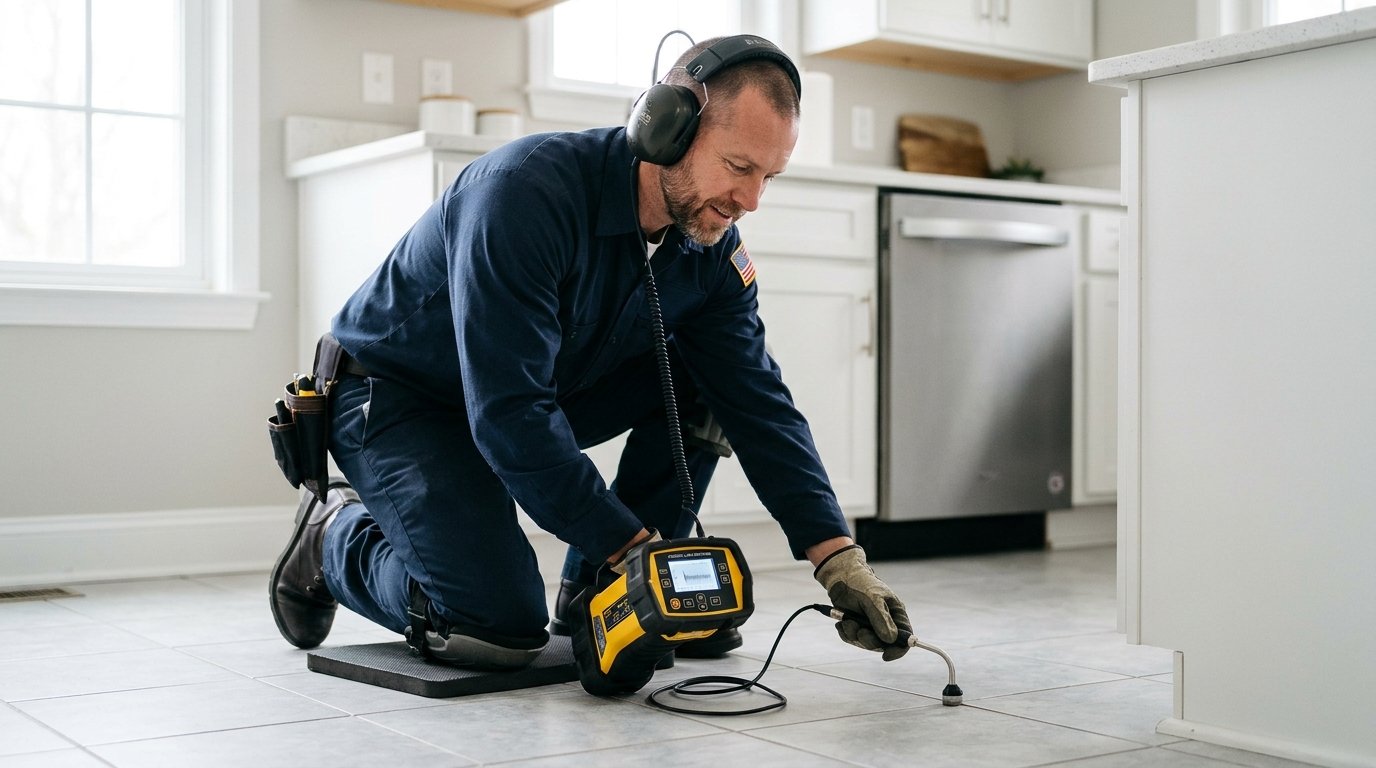
A leak occurring beneath your home’s poured concrete foundation is among the most deceptive plumbing emergencies a homeowner can experience. Unaddressed slab leaks cause structural foundation shifting, mold proliferation, and inflated utility bills. Here is the realistic slab leak repair cost in 2026, comparing detection expenses, repair techniques, and insurance coverage.
Quick Pricing Overview
In 2026, the national average cost to repair a residential slab leak is $2,850, with most homeowners spending between $1,800 and $4,800 including electronic leak detection, physical repair or pipe rerouting, and concrete patching.
Common Warning Signs of a Sub-Slab Water Leak
- Unexplained Warm Spots on Floors: Hot water lines running under concrete radiate heat through tile, hardwood, or carpet.
- Continuous Water Meter Movement: The leak indicator dial spins even when all household faucets and appliances are shut off.
- Audible Hissing or Water Rushing: Sound of running water coming from floorboards or wall cavities without plumbing usage.
- Damp Baseboards or Floor Buckling: Moisture wicked upward through porous concrete slab footings.
2026 Slab Leak Repair Cost by Method
| Repair Method | Process Description | Typical Cost Range (2026) | Pros & Cons |
|---|---|---|---|
| Electronic Acoustic Leak Detection | Pinpointing leak location using ultrasonic sensors & thermal imaging | $250 – $600 | Required first step; non-invasive |
| Direct Spot Repair (Jackhammering) | Breaking through slab floor to solder a replacement copper sleeve | $1,400 – $3,200 | Disrupts flooring; nearby aging copper remains vulnerable |
| Overhead PEX Pipe Rerouting | Abandoning damaged slab line and running flexible PEX through walls/attic | $2,400 – $5,500 | Recommended long-term solution; avoids breaking floor slab |
| Epoxy Pipe Lining (Trenchless) | Coating interior of leaking copper lines with structural epoxy barrier | $2,800 – $6,200 | Zero excavation; requires specialized plumbing technicians |
Does Homeowners Insurance Cover Slab Leak Repairs?
Understanding policy language makes a substantial financial difference:
- What Insurance Typically Covers (“Tear-Out & Access”): Most standard HO-3 homeowner policies cover the substantial expense of accessing the pipe (jackhammering concrete) and repairing resulting water damage to flooring, drywall, and cabinetry.
- What Insurance Excludes: The plumbing repair itself (the piece of copper pipe or solder fitting, usually $200–$400) is considered normal maintenance and is paid out-of-pocket by the policyholder.
2026 Cost Comparison: Spot Repair, Pipe Rerouting, and Full Repiping
When hot or cold water lines buried beneath a concrete slab develop pinhole leaks, your repair bill depends on whether plumbers break through the floor directly above the leak or abandon the buried pipe altogether. Because every method starts with locating the exact breach, factor electronic detection into your upfront budget.
- Electronic Slab Leak Detection ($250 to $600): Acoustic listening gear, thermal imaging cameras, and helium/nitrogen tracer gas pinpoint leaks within inches so crews do not needlessly demolish flooring.
- Direct Spot Repair ($1,800 to $4,200): Plumbers cut out flooring, jackhammer a 2-by-2-foot section of concrete, repair or couple the damaged copper section, and patch the slab. Flooring replacement (tile, hardwood, or LVP) adds extra cost.
- Single-Line PEX Rerouting ($1,500 to $3,500): Instead of busting concrete, technicians cap the leaking under-slab line at both manifolds and run a new flexible PEX line overhead through the attic and interior drywall walls.
- Whole-House PEX Repipe ($5,500 to $13,000): For 2- to 3-bath homes with 30- to 50-year-old soft copper pipes already suffering multiple pinhole leaks, bypassing every under-slab water line at once prevents repeat concrete demolition.
Signs of an Active Slab Leak Before Utility Bills Spike
Catching a foundation leak early minimizes subfloor mold and soil shifting beneath the slab. Check these four indicators if you suspect hidden water loss:
- Water Meter Leak Indicator Test: Shut off every faucet, ice maker, and irrigation zone, then inspect the small red or silver triangular dial on your street water meter—any rotation confirms active pressurized water loss.
- Localized Warm Floor Spots: Hot-water slab leaks frequently heat a noticeable patch of ceramic tile or vinyl flooring and trigger your water heater to cycle every 20 to 30 minutes.
- Audible Hissing Near Manifolds: Listening near bathroom vanities or laundry wall shutoffs at night often reveals continuous rushing water inside quiet rooms.
- Flooring Buckling and Utility Jumps: Unexplained 2,000- to 5,000-gallon monthly water bill increases, cupped hardwood planks, or dark damp carpet tack strips require immediate acoustic testing.
Why Slab Leaks Happen and How to Prevent Repeat Copper Failures
Understanding the root cause stops a single $2,000 patch from turning into an annual emergency. Hot-water copper lines buried directly in concrete frequently fail from abrasion corrosion as pipes expand and rub against sharp gravel aggregate during temperature cycles, or from electrolysis caused by stray electrical currents or dissimilar metal contact. Aggressive municipal water with pH below 7.0 or high water velocity also thins copper elbows from the inside out. After repairing a leak, test your home’s static water pressure with a $15 hose-bib gauge: if pressure exceeds 75 to 80 PSI, installing a whole-house pressure-reducing valve (PRV) set to 55 to 65 PSI ($350 to $650 installed) alongside a thermal expansion tank cuts pipe wall stress dramatically.
What Homeowners Insurance Covers vs. What You Pay Out of Pocket
Standard HO-3 homeowners insurance handles slab leaks using a strict access and tear-out distinction that surprises many homeowners:
- What Insurance Usually Covers: If a sudden or accidental plumbing rupture forces a plumber to jackhammer your concrete slab, insurers generally cover the cost to break open the floor, dry out water-damaged drywall/cabinets, and repour concrete—subject to your $1,000 to $2,500 deductible.
- What Insurance Excludes: Policies almost never pay the $150 to $400 cost to fix the corroded pipe itself (‘wear and tear’), nor do they cover a whole-house PEX repipe upgrade.
- The Slow-Leak Trap: Claims are routinely denied if an adjuster finds long-term rot, mold, or rust proving the leak dripped slowly for weeks or months—document discovery immediately and request itemized invoices separating access/restoration from pipe repair.
Recommended U.S. Cost & Coverage Guides
- Helical Piers Cost in 2026: Foundation Underpinning & Per-Pier Installation Pricing
- Radon Mitigation System Cost in 2026: Sub-Slab Depressurization & Installation Guide
- Commercial Water Damage Restoration & Structural Drying in 2026: IICRC Standards, Insurance Direct Billing, and Cost per Square Foot
- Industrial Metal Roofing & TPO Commercial Roof Replacement in 2026: Cost per Square Foot, Warranties, and Contractor Bids



1 thought on “Slab Leak Repair Cost in 2026: Direct Repair, Rerouting & Insurance Coverage Guide”