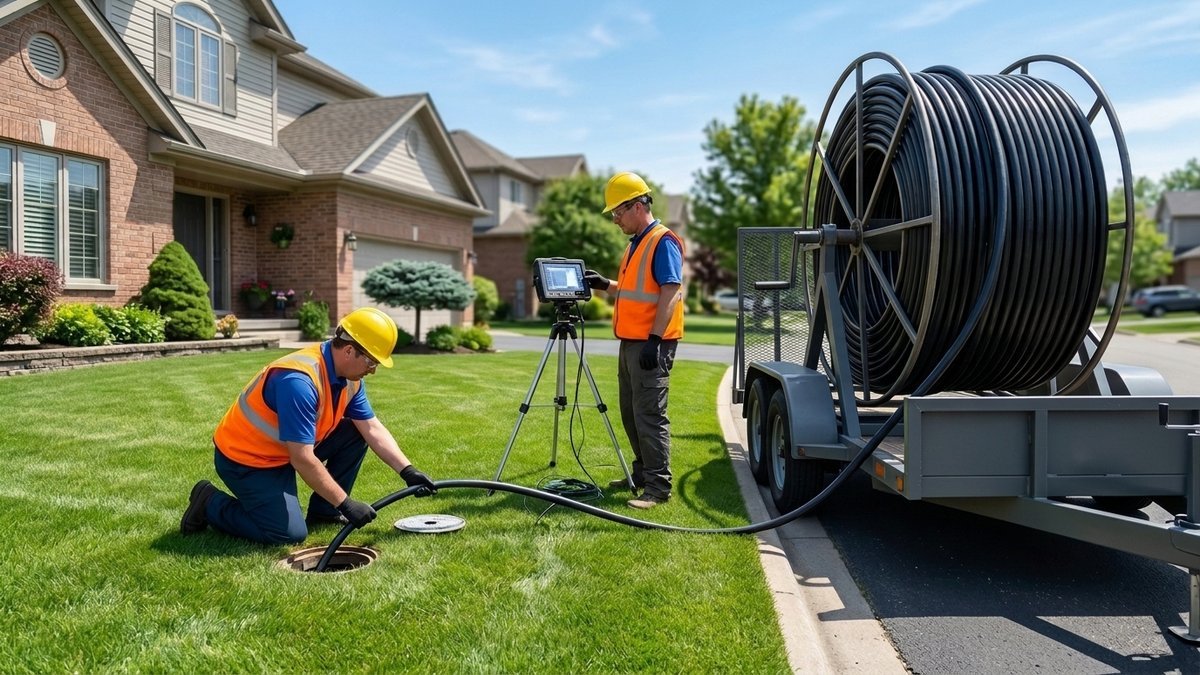
When a residential main sewer lateral cracks from aggressive tree root intrusion, corrodes due to aging cast iron, or collapses from shifting soil, homeowners historically faced the nightmare of an excavator tearing up their driveway, mature landscaping, and concrete patio. In 2026, modern no-dig rehabilitation technologies make it possible to install a brand-new, root-proof sewer main underground in a single day. Here is a complete engineering breakdown of trenchless sewer line replacement cost, comparing Cured-in-Place Pipe (CIPP) lining against hydraulic pipe bursting.
Quick Takeaway: 2026 Trenchless Sewer Replacement Cost
In 2026, the average national trenchless sewer line replacement cost ranges from $4,800 to $13,500 for a standard 40-to-60-linear-foot residential sewer lateral, or $85 to $260 per linear foot. While per-foot pipe materials are 20% higher than open-trench digging, homeowners save $3,500 to $9,000+ by eliminating driveway concrete demolition, retaining wall tear-outs, and municipal street repaving fees.
The Two Trenchless Methods Explained: CIPP Lining vs. Pipe Bursting
Licensed trenchless plumbing specialists use two distinct structural rehabilitation methods depending on the condition of your existing host pipe (clay tile, Orangeburg, cast iron, or ABS/PVC):
- Cured-in-Place Pipe (CIPP) Structural Relining ($85 – $210 per linear foot): Ideal when the host pipe has cracks, leaking joints, root intrusion, or bottom-channel channeling, but has not completely collapsed. Technicians hydro-jet the pipe clean, then invert or pull a flexible felt/fiberglass liner saturated with two-part structural epoxy resin through a single cleanout access point. An inflatable bladder presses the liner tightly against the inner host pipe walls while steam, hot water, or UV light cures the epoxy into a seamless, joint-free “pipe within a pipe” in 2 to 4 hours.
- Hydraulic Pipe Bursting ($105 – $260 per linear foot): Required when the existing sewer pipe has severely collapsed, sagged (“bellied”), or needs to be upsized from 4 inches to 6 inches. Contractors excavate two small 4×4-foot access pits—one at the house foundation exit and one at the municipal property line connection. A conical steel bursting head attached to a hydraulic winch is pulled through the old pipe, fracturing the old clay or cast iron outward into the soil while simultaneously pulling a brand-new, heat-fused High-Density Polyethylene (HDPE) SDR-17 pipe into the exact same pathway.
2026 Trenchless vs. Traditional Sewer Replacement Cost Comparison
To evaluate total out-of-pocket expenses, homeowners must compare both the plumbing installation invoice and post-excavation property restoration costs:
| Replacement Method | Cost Per Linear Foot | 50-Foot Lateral Base Cost | Driveway / Landscape Restoration | True Total Project Cost (2026) |
|---|---|---|---|---|
| CIPP Epoxy Structural Relining (Zero/1 Pit) | $85 – $210 / ft | $4,250 – $10,500 | $0 – $500 | $4,500 – $11,000 |
| Hydraulic Pipe Bursting (HDPE) (2 Small Pits) | $105 – $260 / ft | $5,250 – $13,000 | $400 – $1,200 | $5,650 – $14,200 |
| Traditional Open-Trench Excavation (Backhoe) | $65 – $165 / ft | $3,250 – $8,250 | $3,500 – $11,500+ (Concrete/Asphalt/Sod) | $6,750 – $19,750+ |
Itemized Cost Factors That Move Your Estimate
When reviewing itemized contractor bids, five technical variables determine whether your project falls on the lower or upper end of the 2026 cost spectrum:
- Pre-Lining Hydro Jetting & Descaling ($450 – $1,400): Before an epoxy liner can bond to an existing cast iron pipe, contractors must run high-speed carbide chain flails (descaling) and 4,000-PSI hydro-jetters to strip decades of rust tuberculation and tree root masses.
- Depth of the Sewer Lateral (4 ft vs. 10+ ft): If your pipe bursting entry pit near the street curb is deeper than 5 feet, OSHA regulations require hydraulic trench shoring boxes and additional excavation labor, adding $1,200 to $2,800.
- Under-Slab Cast Iron Branch Tie-Ins ($800 – $1,600 per connection): Re-establishing internal branch connections (where bathroom and kitchen drain lines Y-connect into the main building drain under a concrete slab) requires robotic internal cutters or brush-cast epoxy coatings.
- Municipal Right-of-Way & Sidewalk Permits ($250 – $1,100): If the sewer problem extends past the property line to the city wye tap beneath a public sidewalk or street, municipal bond permits and city inspector sign-offs are mandatory.
Pro Tip: Check Your Homeowners Policy for a “Service Line Endorsement”
While standard HO-3 homeowners insurance excludes exterior buried sewer pipes, over 65% of major US carriers now include or offer an optional Underground Service Line Coverage endorsement (typically costing just $40–$75/year). If active on your policy, this endorsement covers $10,000 to $25,000 toward trenchless sewer line replacement caused by tree root invasion, pipe collapse, corrosion, or frost heave, subject only to a $500 or $1,000 deductible!
When Trenchless Sewer Repair Cannot Be Used
An honest trenchless contractor will always perform a recorded HD color sewer camera inspection with a digital sonde locator before quoting. Trenchless CIPP relining is not viable if your sewer line has a severe “belly” (negative slope sag) holding standing water. Because an epoxy liner conforms to the contour of the host pipe, relining a sagged pipe will leave the belly intact. In those cases, spot-excavation to re-grade the bedding gravel—or full hydraulic pipe bursting with rigid rod guidance—is required.
Frequently Asked Questions About Trenchless Sewer Replacement
Does CIPP epoxy pipe lining reduce the inside diameter of my 4-inch sewer pipe?
A cured structural epoxy liner is only 4mm to 6mm thick—reducing a 4-inch pipe’s diameter by less than 5%. However, because the cured epoxy interior has a glass-smooth coefficient of friction (Manning’s n-value of 0.009 vs. 0.015 for rough cast iron or clay joints) and zero joint offsets to snag debris, the actual flow velocity and drainage capacity of the pipe increase after lining.
How long do trenchless sewer replacements last?
Both ASTM F1216 certified CIPP epoxy liners and butt-fused HDPE pipe bursting installations are engineered and lab-tested for a 50-to-100-year structural design life. Because neither system contains glued or mortared joints, tree roots cannot penetrate the new pipe wall.
How long will my water and sewer service be shut off during installation?
Over 90% of residential trenchless CIPP and pipe bursting projects are completed in 1 single day (6 to 10 hours), with active plumbing downtime limited to just 4 to 6 hours while the liner cures or the HDPE pipe is winched into place.
How to Vet Trenchless Plumbing Contractors & Compare Warranties
Because trenchless pipe lining and hydraulic bursting require $120,000+ in specialized inversion drums, steam curing boilers, and hydraulic pulling winches, many general residential plumbers subcontract the work or mark up third-party bids. Before signing a contract, verify these four credentials:
- Manufacturer Resin & Liner Certification: Ask which ASTM F1216 structural epoxy system the contractor installs (e.g., Perma-Liner, NuFlow, MaxLiner, or Pipelining Technologies) and verify that their 10-to-50-year warranty covers both material defects and installation labor.
- Pre- and Post-Installation HD Video Proof: Never pay the final balance until the technician runs a post-curing color CCTV camera inspection from the house cleanout all the way to the municipal main wye connection and provides you with the MP4 video file for your property disclosures and homeowner insurance records.
- 100% Styrene-Free / Low-VOC Epoxy Formulations: If the contractor is relining cast iron drain pipes beneath your interior living space slab, specify a 100% solids, styrene-free epoxy resin so no harsh chemical odors permeate your home during curing.
Recommended U.S. Cost & Coverage Guides
- Asbestos Abatement Cost in 2026: Removal Price Per Square Foot, Pipe Encapsulation & Air Clearance Testing
- French Drain Installation Cost in 2026: Interior vs Exterior Basement Waterproofing Pricing
- Helical Piers Cost in 2026: Foundation Underpinning & Per-Pier Installation Pricing
- Radon Mitigation System Cost in 2026: Sub-Slab Depressurization & Installation Guide