
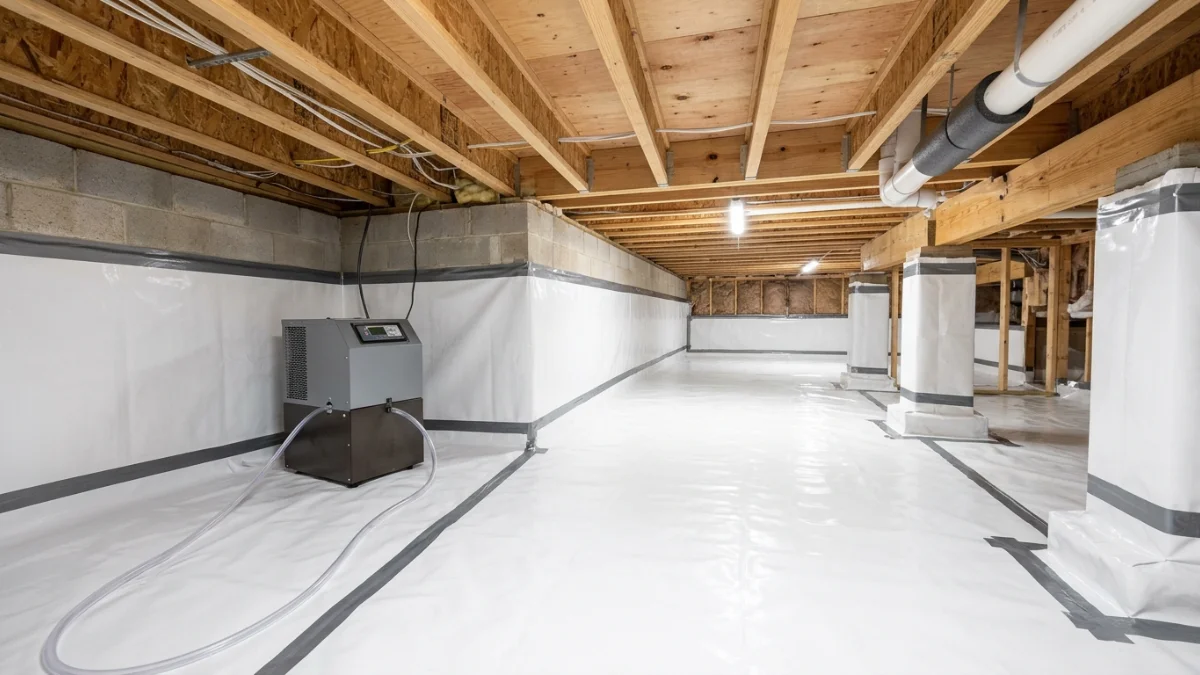
Across humid and mixed-climate regions of the United States, unsealed vented crawl spaces are the leading cause of structural floor joist rot, toxic mold proliferation, buckling hardwood floors, and elevated indoor cooling bills. In 2026, building science standards—backed by the U.S. Department of Energy and International Residential Code (IRC) Section R408.3—overwhelmingly favor sealing and conditioning the sub-floor envelope rather than relying on outdated passive foundation vents. Before signing a contractor proposal, understanding the true crawl space encapsulation cost and local waterproofing contractor quotes will help you avoid overpriced add-ons while ensuring code-compliant moisture protection.
2026 Crawl Space Encapsulation Cost Summary (U.S. National Averages)
- National Average Total Cost: $5,500 to $14,500 for a standard 1,200 to 1,800 sq. ft. crawl space (median U.S. homeowner spend: $8,400).
- Cost Per Square Foot (Turnkey Professional): $4.50 to $10.50 per sq. ft. of floor and foundation wall surface area.
- 20-Mil Reinforced Vapor Barrier Only: $2.20 to $4.25 per sq. ft. installed with seam tape, foundation wall fasteners, and pier wrapping.
- Commercial Crawl Space Dehumidifier: $1,350 to $2,400 installed (Energy Star 70-pint to 100-pint Santa Fe or AprilAire unit with condensate line).
How Much Does Crawl Space Encapsulation Cost by Square Footage in 2026?
When homeowners ask how much does crawl space encapsulation cost, the largest pricing variables are total square footage, headroom clearance, existing standing water or fungal growth, and liner thickness (measured in mils, where 1 mil equals one-thousandth of an inch). A basic 6-mil polyethylene ground cover—which merely satisfies bare-minimum building code for a dirt-floor crawl space—costs just $0.75 to $1.50 per square foot, but it tears easily and leaves wall masonry and rim joists exposed to moisture vapor diffusion.
True crawl space encapsulation creates a continuous, hermetically sealed mini-basement by running a heavy-duty 12-mil to 20-mil cord-reinforced virgin polyolefin liner across the entire dirt floor, up the foundation walls (leaving a 3-inch termite inspection gap at the top sill plate), and around every support pier. Below is the 2026 cost breakdown by crawl space footprint:
| Crawl Space Size (Sq. Ft.) | Basic 12-Mil Seal (No Drainage) | Full 20-Mil + Dehumidifier | Severe Wet Crawl (Sump + Mold Remediation) |
|---|---|---|---|
| 800 Sq. Ft. | $3,200 – $4,600 | $5,100 – $7,200 | $7,800 – $11,500 |
| 1,200 Sq. Ft. | $4,500 – $6,400 | $6,800 – $9,600 | $10,200 – $14,800 |
| 1,600 Sq. Ft. | $5,800 – $8,200 | $8,500 – $12,400 | $12,500 – $17,900 |
| 2,200+ Sq. Ft. | $7,600 – $10,800 | $11,200 – $15,900 | $15,800 – $22,500+ |
Itemized Cost to Encapsulate a Crawl Space: Component Breakdown
When using a crawl space encapsulation cost calculator or comparing itemized bids from foundation specialists, make sure every quote separates material specifications from prep labor. Because up to 50% of the air on the first floor of a home rises directly from the crawl space via the thermal “stack effect,” skipping a single step can trap humidity rather than eliminate it.
1. Sub-Floor Cleaning, Debris Removal & Old Insulation Disposal ($600 – $1,800)
Hanging fiberglass batts between floor joists in a humid crawl space acts like a wet sponge, attracting rodents and accelerating wood rot. Contractors first remove sagging fiberglass batts, clear construction debris and sharp rocks, and level the soil grade so the liner will not puncture.
2. Standing Water Drainage, Perimeter Trenching & Sump Pump ($1,800 – $4,200)
You should never lay a vapor barrier over pooling groundwater. If rainwater or a high water table seeps through the footing joint, contractors install a perforated perimeter French drain connected to a sealed sump basin and a 1/3 HP cast-iron sump pump with battery backup. For deeper structural water issues, compare our guide on basement waterproofing and foundation repair costs in 2026.
3. Mold Remediation & Wood Fungicide Treatment ($800 – $2,800)
If wood moisture content in the joists exceeds 19% and white or black fungal hyphae are visible on the subfloor, technicians apply an EPA-registered antimicrobial biocide and soda-blasting or HEPA wire-brushing before sealing the space.
4. Foundation Vent Sealing & Rim Joist Spray Foam Insulation ($900 – $2,500)
All exterior foundation vents are permanently blocked with rigid XPS foam blocks and sealed with closed-cell polyurethane spray foam. Insulating the perimeter rim joists and foundation walls with R-10 to R-15 rigid foam board (rather than insulating between the floor joists) brings the crawl space into the thermal envelope of the home.
5. 20-Mil Antimicrobial Reinforced Vapor Barrier ($2,200 – $5,500)
The gold standard in 2026 is a 20-mil, 7-ply virgin polyethylene barrier with polyester cord reinforcement and an antimicrobial silver-ion coating. All overlaps (minimum 6 to 12 inches) are sealed with waterproof butyl tape, and the top edges are mechanically fastened to the masonry wall with polyurethane sealant and Christmas-tree masonry pins.
Pro Tip: Always Leave a 3-Inch Termite Inspection Gap
In termite-prone states across the Southeast, Mid-Atlantic, and Midwest, building codes and pest control bonds require a 2-to-3-inch unobstructed inspection gap below the wooden sill plate at the top of the foundation wall. Never allow an installer to spray closed-cell foam or run opaque plastic directly over the wood sill plate without a clear viewing strip, or it may void your subterranean termite warranty. See our professional termite and pest control guide for compliance rules.
Energy Savings, Federal Tax Credits & ROI in 2026
According to field studies by Advanced Energy and the U.S. Department of Energy, encapsulating and conditioning a vented crawl space reduces annual heating and cooling energy consumption by 15% to 20% ($300 to $550 per year for a typical U.S. home) while extending the lifespan of ductwork and air handlers located underneath the house. Homeowners who also seal leaky sub-floor HVAC trunks—covered in our air duct replacement and Aeroseal duct sealing cost guide—can cut HVAC runtime by up to 30%.
Additionally, under the federal Energy Efficient Home Improvement Credit (IRS Section 25C) in 2026, homeowners can claim a 30% federal tax credit up to $1,200 per year on the material cost of qualified rigid foam board insulation, spray foam air sealing products, and vapor retarders installed in a primary residence. Before hiring a contractor, compare 3 certified crawl space encapsulation quotes in your ZIP code and request an itemized separation of material costs for IRS Form 5695.
Frequently Asked Questions (2026 US Consumer Guide)
1. Is 12-mil or 20-mil vapor barrier better for crawl space encapsulation?
A 12-mil reinforced liner is sufficient for clean, smooth crawl spaces that are rarely entered. However, if your crawl space has rocky soil, HVAC equipment that requires annual filter servicing, or plumbing cleanouts, upgrading to a 20-mil cord-reinforced liner (usually $800 to $1,400 extra) prevents punctures from boots and toolboxes and typically carries a 25-year transferable warranty.
2. Do I really need a dehumidifier after encapsulating my crawl space?
Yes. Without humidity control, seasonal condensation and minor air infiltration can push relative humidity above 60%, triggering mold growth even inside a sealed crawl space. Either a dedicated commercial dehumidifier set to 50% RH or a code-approved conditioned supply air damper from your main HVAC system is mandatory.
3. Can I encapsulate a crawl space myself to save money?
DIY crawl space encapsulation materials (a 20-mil liner roll, butyl seam tape, masonry fasteners, vent foam blocks, and a 70-pint dehumidifier) cost $1,800 to $3,200 for a 1,200 sq. ft. space—saving $4,000+ in labor. However, if your crawl space has active water intrusion, fungal rot, or structural sagging, professional remediation is strongly recommended.
4. Does homeowners insurance cover crawl space encapsulation?
Standard HO-3 homeowners insurance policies exclude ground seepage, high humidity, and gradual rot. Insurance will only pay to dry out a crawl space and replace a ruined vapor barrier if the damage was caused by a sudden, accidental covered peril—such as a burst domestic water supply pipe.
Recommended U.S. Cost & Coverage Guides
- Spray Foam Insulation Cost in 2026: Open-Cell vs Closed-Cell Price Per Board Foot & Energy Tax Credits
- Walk-In Tubs for Seniors Cost in 2026: Installation Pricing, Hydrotherapy Features & Medicare Coverage
- Trenchless Sewer Line Replacement Cost in 2026: Pipe Bursting vs. CIPP Relining Pricing
- Commercial HVAC Chiller Retrofits & Variable Refrigerant Flow in 2026: Cost per Ton, Utility Rebates, and Equipment Leasing



2 thoughts on “Crawl Space Encapsulation Cost in 2026: 20-Mil Vapor Barrier, Dehumidifier & Per-Sq-Ft Pricing”