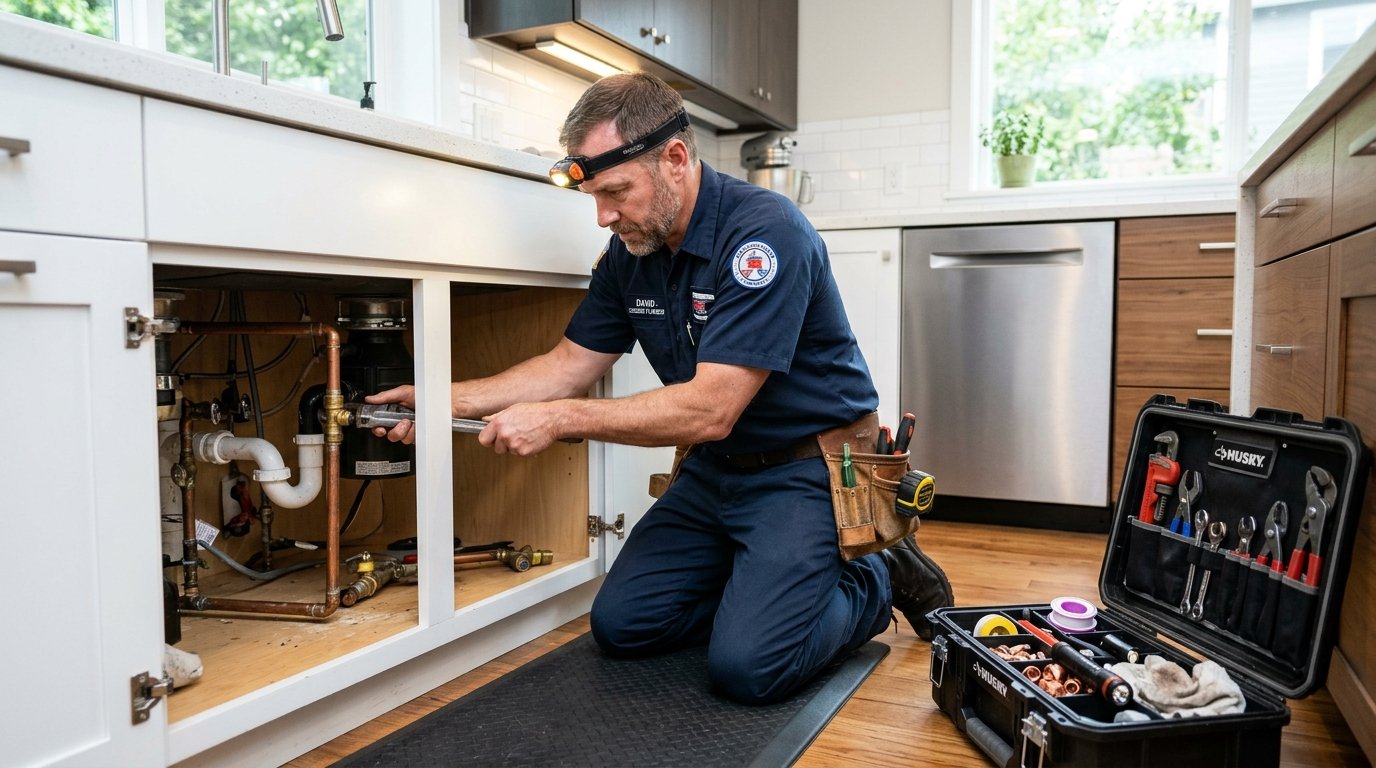
A sudden burst pipe, sewer line backup, or ruptured water heater can discharge hundreds of gallons of water into a home within minutes. In 2026, understanding emergency plumbing pricing benchmarks helps homeowners navigate after-hours diagnostic fees and urgent structural repairs.
Emergency Plumber Hourly Rates and After-Hours Surcharges
Licensed master plumbers charge standardized rate multipliers for service calls outside normal business hours (8:00 AM – 5:00 PM Monday through Friday):
| Service Window | Average Hourly Labor Rate | Trip / Diagnostic Dispatch Fee |
|---|---|---|
| Standard Business Hours | $85 – $150 / hour | $50 – $100 |
| Evenings & Saturdays | $150 – $225 / hour (1.5x Multiplier) | $100 – $175 |
| Sundays & Federal Holidays / Midnight | $200 – $350 / hour (2x to 2.5x Multiplier) | $150 – $250 |
Common Emergency Plumbing Repairs and National Average Pricing
- Burst Copper or PEX Pipe Repair: $350 – $950 for accessible plumbing lines; $1,200 – $3,200 if concealed inside finished drywall or foundation subflooring.
- Main Sewer Line Emergency Snake & Augering: $300 – $650 to clear tree roots or major foreign object obstructions.
- Emergency Water Heater Tank Replacement (50-Gal): $1,500 – $2,800 installed for standard atmospheric gas or electric units.
- Main Water Shutoff Valve Replacement: $275 – $550 installed with a modern full-port brass quarter-turn ball valve.
Does Homeowners Insurance Cover Emergency Plumbing?
Standard HO-3 homeowner insurance policies cover “sudden and accidental” water damage resulting from burst pipes, water heater failure, or ruptured appliance supply hoses. However, insurance carriers exclude the repair of the plumbing pipe itself if failure resulted from gradual wear-and-tear, corrosion, or deferred maintenance.
2026 Emergency Plumbing Rate Benchmarks: Nights, Weekends, and Holidays
When water is actively flooding a ceiling or backing up through a floor drain at 11:00 PM, emergency plumbers price both dispatch urgency and immediate technician overtime. Unlike standard daytime service calls—where licensed plumbers typically bill \$95 to \$175 per hour—after-hours emergency dispatches add trip fees, priority minimums, and overtime multipliers.
- Emergency dispatch / trip fee: Expect a flat \$125 to \$300 arrival fee just to get a licensed truck to your driveway outside standard 8:00 AM–5:00 PM weekday hours.
- Hourly night and weekend labor: Overtime rates commonly jump to 1.5x to 2.0x standard billing, putting emergency labor between \$180 and \$350 per hour, often billed in two-hour minimums.
- Holiday surcharges: Major holidays such as Thanksgiving, Christmas, or New Year’s Day frequently carry an added flat surcharge of \$150 to \$350 on top of double-time labor.
Burst Pipe Repair Costs by Location and Pipe Material
What you ultimately pay depends far more on accessibility and secondary damage than the pipe fitting itself. A straightforward accessible split in a basement utility room takes under 90 minutes, whereas a ruptured copper riser sealed inside tiled shower framing requires demolition, drying, and drywall patching afterward.
- Exposed basement or crawlspace burst pipe: \$350 to \$950 total (including emergency callout, cutting out the split section, and soldering copper or crimping PEX).
- Pipe inside finished drywall or ceiling: \$700 to \$1,800 for access cutting and pipe repair, excluding subsequent \$400–\$1,200 drywall/paint restoration.
- Underground main water service line break: \$1,500 to \$4,500+ depending on trench depth, directional boring, and municipal shutoff coordination.
- Water extraction and structural drying: If water sits for more than a few hours, emergency mitigation crews charge \$1,200 to \$4,000+ for commercial dehumidifiers, air movers, and antimicrobial treatment to prevent mold growth.
What Homeowners Insurance Covers—and What It Denies
Most standard HO-3 homeowners insurance policies cover sudden and accidental water discharge, such as a frozen pipe bursting overnight or a supply hose snapping behind a washing machine. Crucially, insurance usually pays to tear open walls to reach the break and to dry, repair, or replace ruined flooring, cabinets, and drywall—minus your policy deductible (commonly \$1,000 to \$2,500).
However, insurers routinely deny two major pieces of the bill: the cost of repairing the broken pipe itself (often \$250–\$600, excluded as wear and tear) and gradual leaks that show months of rot, rust, or pre-existing mold. Sewer or sump-pump backups also require a separate Water Backup endorsement (typically \$50–\$150/year for \$10,000–\$25,000 in coverage). Before calling an emergency truck at 2:00 AM, shut off your main water valve, turn off the water heater breaker or gas valve, open the lowest cold-water faucet to relieve pressure, and photograph standing water immediately so your adjuster cannot dispute whether damage was sudden.
Should You Shut Off the Main Water Valve Before the Plumber Arrives?
Yes—locating and turning off your home’s main water shut-off valve (usually near the front foundation wall, crawlspace, or street meter box) and opening the lowest cold-water faucet immediately stops pressurized flooding, prevents ceiling drywall collapse, and can easily save ,500 to ,000 in secondary water-mitigation damage while you wait for an emergency plumber.
Recommended U.S. Cost & Coverage Guides
- Tankless Water Heater Installation Cost in 2026: Gas vs. Electric & Rebates Guide
- Crawl Space Encapsulation Cost in 2026: 20-Mil Vapor Barrier, Dehumidifier & Per-Sq-Ft Pricing
- Standby Whole-House Generator Installation Costs in 2026: Natural Gas vs Propane, Automatic Transfer Switches, and Contractor Quotes
- Foundation Piering and Underpinning Costs in 2026: Helical vs Push Piers, Soil Mechanics, and Structural Repair Guide