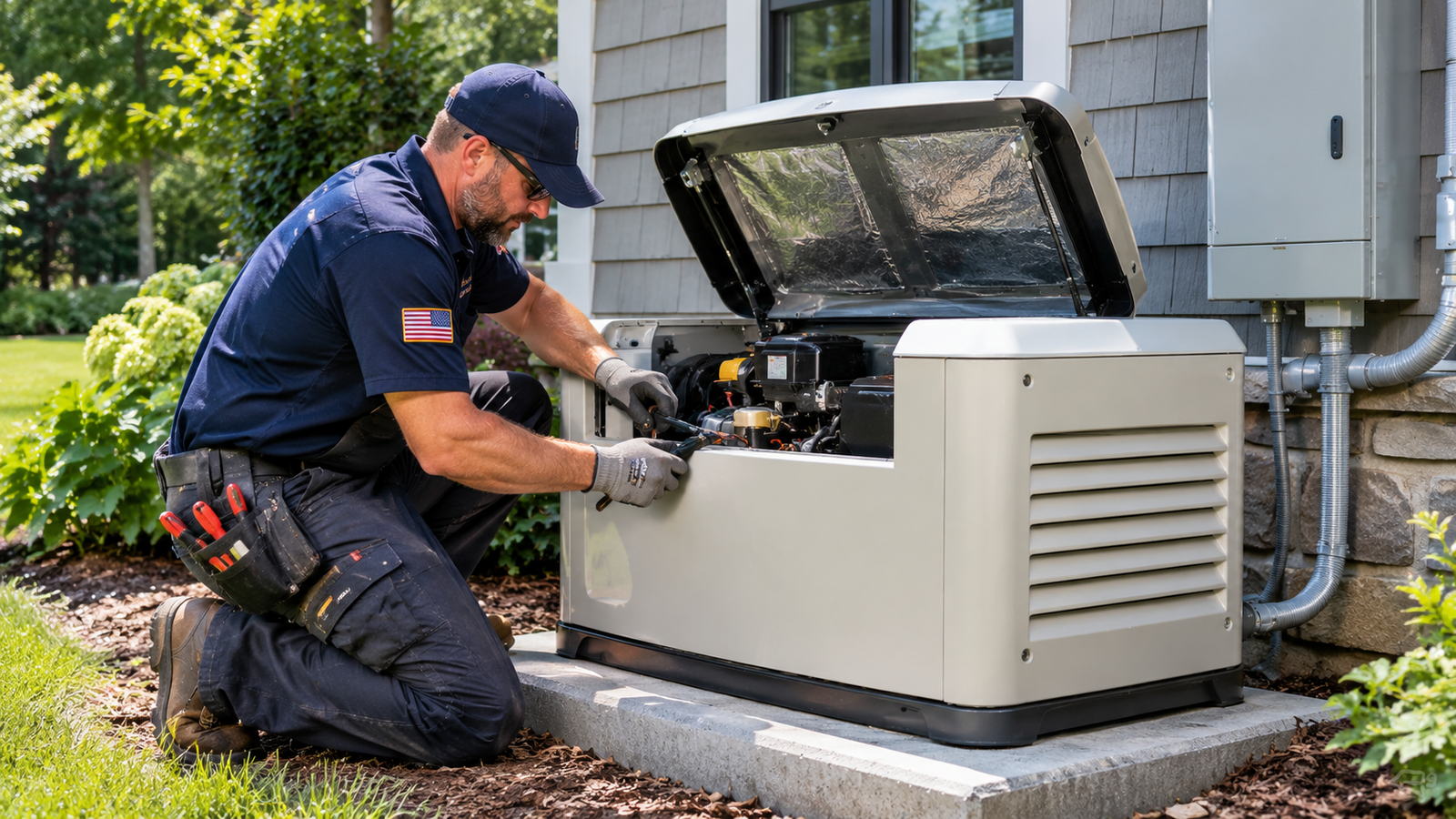
With aging regional power grids, extreme weather events, and recurring electrical outages across the United States, installing a permanently wired whole-house standby generator has become one of the most sought-after residential infrastructure investments in 2026.
Average Total Cost to Install a Standby Generator
The total turnkey cost to install an automatic standby generator typically ranges from $6,500 to $15,500, with the national average falling around $10,200 for a 20kW to 22kW system capable of powering central air conditioning, heating, and critical home circuits.
Generator Unit Sizing and Price Breakdown
| Capacity (kW) | Power Output Capabilities | Equipment Cost | Turnkey Installed Cost |
|---|---|---|---|
| 10kW – 14kW | Essential circuits (fridge, lights, sump pump, gas furnace) | $3,200 – $4,500 | $6,500 – $8,500 |
| 16kW – 20kW | Medium home + single 3-ton to 4-ton central A/C unit | $4,500 – $5,800 | $8,500 – $11,500 |
| 22kW – 26kW | Full home coverage, dual central A/C, electric heat & well pump | $5,800 – $7,500 | $11,000 – $15,500 |
| 30kW – 48kW Liquid-Cooled | Luxury estate, multi-zone HVAC, EV charging stations | $12,000 – $22,000 | $18,000 – $32,000 |
Installation Labor Components: Electrical and Fuel Connections
Professional installation requires two licensed trades: a certified master electrician and a licensed mechanical/plumbing contractor:
- Automatic Transfer Switch (ATS): A 200-amp service disconnect ATS automatically detects power grid failure, starts the generator engine within 10 seconds, and safely transfers the home’s electrical load ($900 – $1,800 installed).
- Fuel Source (Natural Gas vs. Propane): Connecting to an existing residential natural gas meter requires sizing the gas line to handle high BTU demands (often 250,000 to 350,000 BTU/hr). Gas utility meter upgrades and piping runs cost $800 – $2,200. Liquid Propane (LP) installations require a dedicated 500-gallon buried or above-ground tank ($2,000 – $3,500).
- Concrete Pad and Permitting: Pouring a 4-inch reinforced concrete pad or anchoring a precast composite pad, combined with local municipal electrical and mechanical permits, adds $500 – $1,200.
Maintenance Contracts and Annual Operating Expenses
Standby generators perform self-diagnostic weekly exercise cycles to lubricate internal engine components. Annual professional maintenance—including synthetic oil replacement, oil filter, spark plugs, valve clearance adjustments, and battery testing—costs between $250 and $450 per year.
2026 Standby Generator Cost by Kilowatt Capacity and Brand Tier
Home standby generator quotes split roughly 50/50 between equipment and licensed electrical, plumbing, and permitting labor. In 2026, turnkey installed pricing across leading air-cooled brands (Generac, Kohler, Briggs & Stratton, Cummins) and heavy-duty liquid-cooled units breaks down as follows:
- 14kW to 18kW Air-Cooled ($8,500 to $12,000 installed): Equipment runs $3,800 to $5,200 alone. Ideal for 1,500 to 2,400 sq. ft. homes running essential circuits, gas heating, refrigerators, and one central AC unit (3 tons or smaller) with load management.
- 20kW to 24kW Air-Cooled ($11,500 to $16,500 installed): Equipment runs $5,200 to $7,500. The most popular whole-house tier for 2,400 to 3,800 sq. ft. homes with 200-amp service.
- 26kW to 48kW Liquid-Cooled ($18,000 to $26,000+ installed): Equipment runs $8,000 to $13,500+. Designed for large estates, multi-zone heat pumps, electric tankless water heaters, or simultaneous EV charging without aggressive load shedding.
Sizing Your Standby Unit: Natural Gas Derating and Load Management
A common sizing mistake is taking a generator’s liquid propane (LP) nameplate rating at face value when connecting to municipal natural gas. Because natural gas carries lower energy density than propane, most air-cooled standby engines derate by roughly 10% on natural gas—meaning a unit marketed as ’22kW’ delivers about 19.5kW on natural gas and a ’24kW’ unit delivers roughly 21.6kW.
You rarely need to upsize to an expensive $20,000+ liquid-cooled generator simply because your home has two AC units or an electric oven. Installing Smart Load Management Modules ($250 to $450 each installed) automatically pauses high-draw non-critical appliances—such as a second AC condenser, clothes dryer, hot tub, or Level 2 EV charger—whenever total demand approaches the generator’s ceiling, allowing a 22kW to 24kW unit to back up an entire 200-amp panel safely under NEC Article 702.
Natural Gas vs. Liquid Propane Economics During Extended Outages
Fuel choice directly affects both installation price and multi-day outage resilience. Municipal natural gas provides virtually unlimited runtime without refueling trucks, though running a 22kW generator at 50% load consumes roughly 180 to 220 CFH—adding $40 to $75 per day to your utility bill depending on regional therm rates. Homes without street gas rely on liquid propane, which burns roughly 1.8 to 2.5 gallons per hour at half load. Installing a dedicated 500-gallon above-ground or buried propane tank adds $2,200 to $4,000 upfront; because propane tanks fill to 80% capacity (400 usable gallons), a 500-gallon tank delivers roughly 6 to 8 days of continuous power before needing delivery. In freezing climates, budget an extra $150 to $300 for a thermostatic battery warmer and oil-breather heater kit so the engine starts reliably below 0°F.
Transfer Switches, Gas Meter Upgrades, and Permit Checklist
Before signing an installation contract, verify whether these infrastructure upgrades are included in your fixed quote or billed as change orders:
- Automatic Transfer Switch (ATS): A 200-amp service-entrance-rated ATS ($1,200 to $2,200 installed) disconnects utility power and starts the generator within 10 to 20 seconds for whole-home backup, whereas a 10- to 16-circuit subpanel switch ($700 to $1,400) powers only selected breakers.
- Utility Gas Meter and Pipe Sizing: A 22kW generator consumes roughly 250 to 330 cubic feet per hour (CFH) at full load. Standard residential 250 CFH gas meters frequently require a utility upgrade to a 400 or 600 CFH meter ($0 to $1,200 depending on utility) plus 1-inch to 1.25-inch black iron or underground poly gas piping ($40 to $85 per linear foot).
- NFPA 37 Setbacks and Annual Maintenance: Most municipalities require at least 5 feet of clearance from operable windows, doors, and fresh-air intakes and 18 inches from exterior walls, plus an annual $250 to $450 oil, filter, and battery service contract.
Recommended U.S. Cost & Coverage Guides
- Foundation Repair Cost in 2026: Piering, Slab Jacking & Crack Injection Average Prices
- Egress Window Installation Cost in 2026: Basement Excavation, Window Well Pricing & IRC Building Code Rules
- Walk-In Tubs for Seniors Cost in 2026: Installation Pricing, Hydrotherapy Features & Medicare Coverage
- Trenchless Sewer Line Replacement Cost in 2026: Pipe Bursting vs. CIPP Relining Pricing