
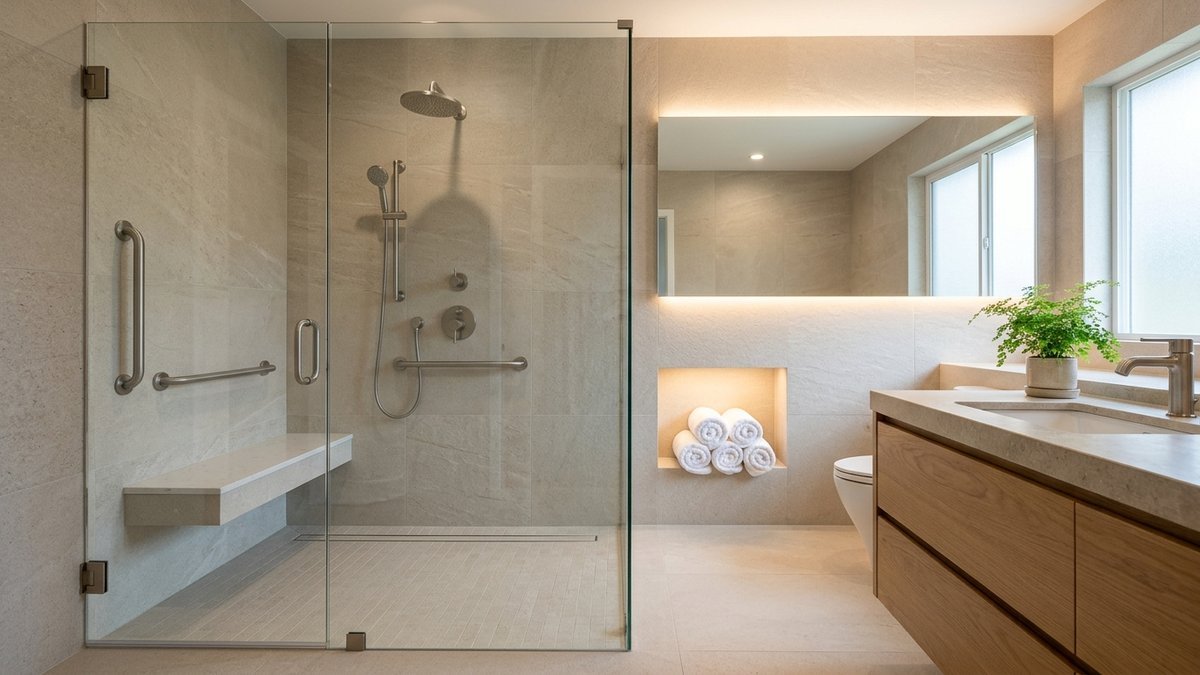
Stepping over a 16-to-20-inch bathtub rim on a slippery porcelain surface is the primary contributor to residential bathroom slip-and-fall injuries among older adults and individuals with limited mobility. Beyond safety, removing an unused, outdated tub in favor of an expansive walk-in shower modernizes bathroom aesthetics and boosts property appeal for modern homebuyers who prefer sleek glass enclosures over traditional tub combinations. Here is an objective 2026 consumer guide to tub-to-shower conversion cost across materials, 1-day acrylic systems, custom tile artisan builds, and accessibility upgrades.
Quick Takeaway: 2026 Tub-to-Shower Conversion Cost
In 2026, the national average tub-to-shower conversion cost is $6,800 to $12,500 completely installed. A fast 1-to-2-day pre-fabricated acrylic/composite wall system (Bath Fitter, West Shore Home, Kohler LuxStone) ranges from $4,500 to $8,500, while a fully custom, luxury ceramic/porcelain tile walk-in shower with frameless glass doors ranges from $8,500 to $16,000+.
2026 Conversion Cost Comparison: Acrylic vs. Composite vs. Custom Tile
The total price tag depends predominantly on wall surround materials, plumbing relocations, and installation timeline:
| System Type & Material | Installation Time | Average Total Cost (Installed) | Pros & Maintenance Considerations |
|---|---|---|---|
| Prefab Acrylic / Fiberglass Unit | 1 to 2 Days | $4,200 – $6,800 | Budget-friendly, non-porous, zero grout cleaning; limited luxury appeal |
| Engineered Solid Surface / Crushed Stone (LuxStone / Corian) | 1 to 3 Days | $6,500 – $10,500 | Realistic marble/stone look, seamless joint design, anti-microbial protection |
| Custom Porcelain or Ceramic Tile | 4 to 7 Days | $8,500 – $14,500 | Highest resale appraisal value, endless design customization; periodic grout sealing |
| Zero-Threshold / Curbless Roll-In Shower (ADA Senior Accessible) | 5 to 8 Days | $10,500 – $17,500+ | 100% Wheelchair accessible, linear drain system, recessed subfloor pan |
Plumbing Reality: The 1.5-Inch vs. 2-Inch Drain Conversion
One of the most common hidden surprise expenses on contractor estimates is the shower drain line upgrade. Standard residential bathtubs use a 1.5-inch drain pipe. However, the Uniform Plumbing Code (UPC) and International Plumbing Code (IPC) mandate a minimum 2-inch drain pipe for walk-in showers to prevent rapid water accumulation over low shower thresholds.
If your bathroom sits over a basement or crawl space, upsizing the P-trap and PVC drain line to 2 inches is straightforward ($350–$600). However, if your home is built on a concrete slab foundation, jackhammering concrete to access and upsize the P-trap adds $800 to $1,500 to plumbing labor.
Essential Safety Upgrades for Aging in Place
If remodeling to support senior independence, four safety enhancements should be integrated during initial rough-in construction:
- Backing Studs for Structural Grab Bars ($150 – $350): While decorative grab bars cost only $40 to $80 each, licensed contractors must screw 2×6 wood blocking between wall studs before hanging drywall or wall boards so the bars can support 500+ lbs of pull force.
- Curbless or Low-Profile 2-Inch Shower Curb ($300 – $800): Standard shower pans feature a 4-to-5-inch step-over curb. Low-profile curbs (1.5″ to 2″) or true zero-threshold curbless pans allow seniors to slide their feet without tripping.
- Built-In Corner Bench or Teak Folding Seat ($250 – $750): Provides a secure seating option for bathing, eliminating the need for bulky, plastic hospital-style shower stools.
- Thermostatic Anti-Scald Pressure-Balancing Valve ($200 – $450): Prevents sudden spikes in scalding water temperatures when someone flushes a nearby toilet.
Pro Tip: Never Eliminate the Only Bathtub in the House!
From a real estate appraisal and resale standpoint, converting your master bathroom tub into an expansive walk-in shower is an exceptional upgrade. However, if your home only has one single full bathroom, eliminating the tub can reduce buyer demand by 15% to 25% among young families with toddlers or infants who require a soaking tub. Always maintain at least one standard bathtub in a secondary hall bathroom!
Frequently Asked Questions About Tub-to-Shower Conversions
How long does a tub-to-shower conversion take to complete?
Pre-engineered acrylic and composite systems (like Kohler LuxStone or Bath Fitter) are typically installed in 1 to 2 consecutive days. Custom ceramic or natural stone tile conversions require 4 to 7 working days to allow mortar, waterproofing membranes (Schluter Kerdi), tile thinset, and grout to cure properly.
Can Medicare pay for a tub-to-shower conversion?
Original Medicare (Parts A & B) does not pay for bathroom remodeling because walk-in showers are classified as home modifications rather than medical equipment. However, disabled veterans can utilize the VA HISA Grant ($6,800), and some Medicare Advantage plans offer supplemental home safety allowances.
Are tub-to-shower conversion expenses tax-deductible?
If a licensed physician writes a letter of medical necessity stating that a walk-in shower is required to accommodate a senior’s physical disability or mobility impairment, the entire cost of the conversion can be deducted as an itemized medical expense on IRS Schedule A to the extent medical expenses exceed 7.5% of Adjusted Gross Income (AGI).
Recommended U.S. Cost & Coverage Guides
- Special Needs Trust Cost in 2026: First-Party vs Third-Party Attorney Fees & SSI/Medicaid Preservation
- Memory Care Facilities Cost in 2026: Average Monthly Rates by State, Assisted Living Differences & Financial Aid
- Memory Care Facility Cost Per Month in 2026: State-by-State Pricing & Medicaid Waivers
- Dental Bone Graft & Sinus Lift Costs in 2026: Implant Viability, Out-of-Pocket Pricing, and Insurance Coverage



1 thought on “Tub-to-Shower Conversion Cost in 2026: Walk-In Remodel Pricing, Acrylic vs Tile & Senior Safety Features”