
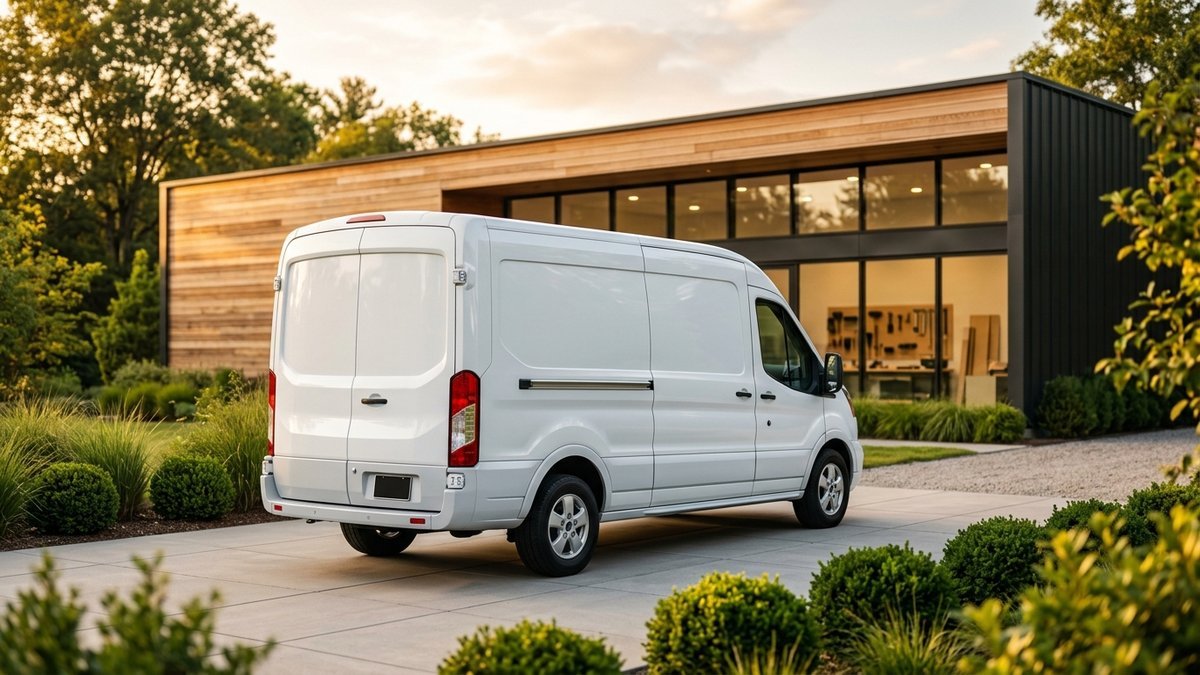
Whether you operate a single Ford Transit cargo van for local plumbing calls, maintain a trio of branded pickup trucks for your residential landscaping crew, or manage a regional delivery fleet of medium-duty box trucks, personal auto insurance will not protect your enterprise against on-the-job vehicular losses. If an employee causes a multi-car collision while transporting tools, inventory, or paying clients, personal carriers will categorically deny the claim, leaving your business vulnerable to six-figure civil judgments. Here is an authoritative 2026 pricing analysis of commercial auto insurance cost across vehicle classes, driver risk profiles, and commercial underwriting tiers.
Quick Takeaway: 2026 Commercial Auto Insurance Benchmarks
In 2026, the national median commercial auto insurance cost is $145 to $225 per month ($1,740 to $2,700 per year) per vehicle for standard light commercial vehicles (passenger cars, cargo vans, light work trucks). Regional service contractors pay an average of $1,850/year, while heavy semi-trailers and long-haul freight operations average $8,500 to $14,000+ per truck annually depending on DOT compliance scores and cargo risk classifications.
2026 Commercial Auto Rates by Vehicle Category
Insurers evaluate commercial automotive risk fundamentally differently from personal underwriting. Gross Vehicle Weight Rating (GVWR), typical radius of operation, and payload hazardousness directly govern premium schedules:
| Vehicle Type & Usage Class | Average Monthly Premium | Annual Premium Range | Standard Policy Limits |
|---|---|---|---|
| Business Sedan / Small SUV (Realtors, Sales Consultants) | $110 – $165 / mo | $1,320 – $1,980 | $500k CSL / $100k Property |
| Full-Size Cargo Van (Plumbers, Electricians, HVAC) | $145 – $240 / mo | $1,740 – $2,880 | $1M Combined Single Limit |
| Commercial Heavy Pickup (F-250/350, Chevy Silverado 2500) | $175 – $295 / mo | $2,100 – $3,540 | $1M CSL + Tool Floater Endorsement |
| Box Truck / Straight Truck (16–26 ft Local Moving & Freight) | $320 – $580 / mo | $3,840 – $6,960 | $1M CSL + Motor Truck Cargo ($100k) |
| Class 8 Tractor-Trailer / Semi-Truck (Interstate Hauling) | $750 – $1,350 / mo | $9,000 – $16,200+ | $1M Primary Auto + $5M Excess Umbrella |
Pro Tip: Don’t Overlook Hired and Non-Owned Auto (HNOA)
If employees occasionally use their personal vehicles to run business errands (such as picking up supplies at Home Depot or driving to client lunch meetings), your business can be sued directly if they cause a catastrophic wreck. Adding a Hired and Non-Owned Auto (HNOA) endorsement to your general liability policy costs as little as $120 to $250 annually and provides crucial secondary liability shielding.
Commercial Auto vs. Personal Auto with a Business Endorsement: Critical Distinctions
Many sole proprietors and small business owners mistakenly believe that attaching a nominal “business use” rider to their personal auto policy provides adequate legal protection. However, significant structural gaps exist between these two insurance models:
- Commercial Entity Registration: If a vehicle is titled, registered, or leased under an LLC, S-Corp, or partnership name, personal auto insurers are legally barred from issuing coverage. Only an authorized commercial auto policy can name corporate entities as insureds.
- Higher Policy Limits: Personal auto policies typically max out at $250,000/$500,000 in bodily injury limits. Commercial auto policies routinely provide $1,000,000 Combined Single Limit (CSL), which is essential because civil lawsuits involving commercial vehicles carry dramatically higher jury verdicts and settlement demands.
- Unlisted and Rotating Employees: Personal policies mandate that every household driver be explicitly listed. Commercial policies offer “any auto” or “blanket permissive driver” endorsements, ensuring that an apprentice, temporary employee, or sub-contractor is fully covered while driving company vehicles.
- Specialized Equipment and Payload: Racks, toolboxes, lift gates, snowplows, and mobile refrigeration units cannot be scheduled under standard personal collision coverage, leading to partial claim denials after accidents.
The 5 Primary Rating Factors That Determine Your Premium
- Driver Motor Vehicle Records (MVR): Underwriters run 3-to-5-year MVR checks on every employee listed on your commercial policy. A single speeding ticket or minor moving violation will increase that vehicle’s surcharge by 15% to 25%, while a reckless driving charge or DUI will cause carriers to demand the driver be excluded entirely.
- Radius of Operation: A local service company operating within a 50-mile radius pays 30% to 45% less than an outfit providing regional transport up to 300 miles away. Highway mileage exponentially increases exposure to high-speed pileups.
- Vehicle Weight Class & Permanently Attached Equipment: Heavy work trucks carrying boom lifts, cranes, or heavy welding rigs create higher kinetic impact in collisions, triggering elevated bodily injury rating schedules.
- Telematics & Fleet Dashcam Adoption: In 2026, over 70% of leading commercial carriers (Progressive Commercial, Travelers, Nationwide, Liberty Mutual) offer 10% to 22% rate credits for fleets outfitted with certified telematics monitors and dual-facing AI dashcams that record collision footage.
- Loss History & Commercial Experience: Maintaining a pristine loss-run statement showing zero at-fault claims over a 36-month window qualifies business owners for preferred fleet tier credits of up to 20%.
Managing Commercial Fleet Claims to Protect Your Loss Runs
In the commercial insurance realm, your “Loss Run Report” serves as your company’s credit report. When negotiating annual renewals, underwriters scrutinize your past 3 to 5 years of claims data. A single $50,000 claim can hike your fleet rates by 35% for three consecutive years, costing more in cumulative surcharges than the original repair.
To insulate your business: establish a post-accident protocol requiring immediate smartphone video documentation, implement pre-trip driver vehicle inspection reports (DVIR), and handle minor bumper scuffs out-of-pocket when damage falls beneath your deductible threshold.
Foire Aux Questions (FAQ) / Frequently Asked Questions
Can I write off commercial auto insurance on my taxes?
Yes. If your vehicle is used 100% for business purposes, 100% of your commercial auto insurance premiums are deductible as ordinary and necessary operating expenses on IRS Schedule C (or your corporate tax return). If you use a personal vehicle partially for business, you can deduct the business-percentage share of insurance or utilize the standard IRS mileage rate.
What is the difference between Combined Single Limit (CSL) and Split Limits?
Split limits divide coverage into per-person bodily injury, total accident bodily injury, and property damage (e.g., 250k/500k/100k). A $1,000,000 Combined Single Limit (CSL) provides a unified $1,000,000 pool of coverage per occurrence, regardless of how payouts are divided between medical bills and property destruction. Most commercial master service agreements and prime contractors mandate a minimum $1M CSL.
How can I lower my commercial auto policy premium quickly?
To reduce costs without compromising essential liability limits: raise comprehensive and collision deductibles from $500 to $1,500 (saving 12% to 18%), institute a strict telematics driver-safety protocol, bundle commercial auto with your Business Owner’s Policy (BOP) or general liability package (saving 10% to 15%), and conduct semi-annual MVR screenings before hiring new drivers.
Does commercial auto insurance cover the tools inside my work truck?
No. Standard commercial auto policies only cover the vehicle chassis, cab, and permanently attached equipment. Portable power tools, ladders, diagnostic computers, and raw inventory require an Inland Marine (Contractor’s Equipment & Tool Floater) policy, which typically costs an additional $25 to $50 per month.
Recommended U.S. Cost & Coverage Guides


