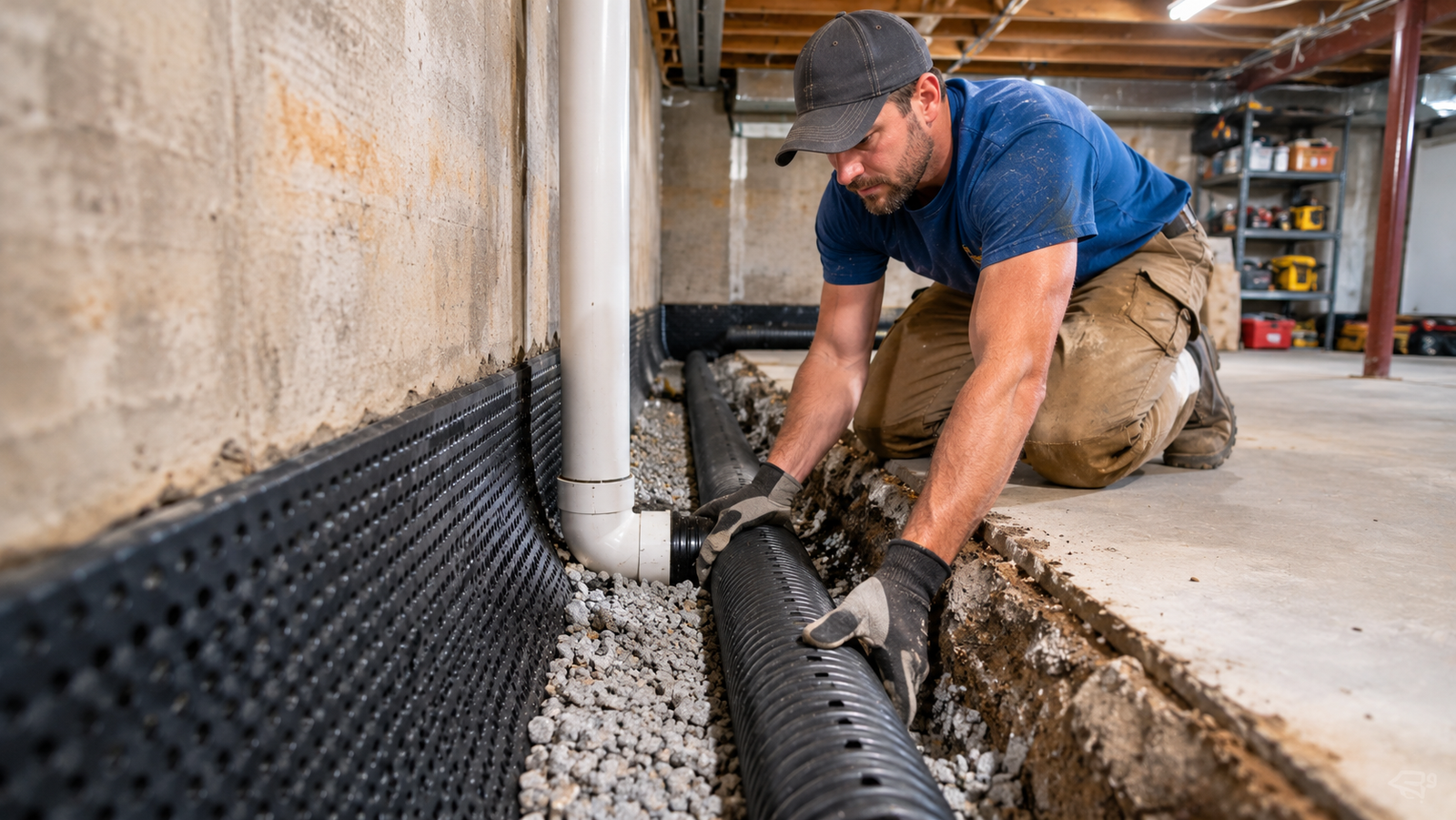
Chronic basement flooding, hydrostatic pressure cracks, and lawn water pooling cause billions in residential structural damage each year. Installing a perforated French drain drainage system provides a permanent hydrostatic relief solution for homeowners in 2026.
Average Turnkey Costs: Interior vs. Exterior Systems
French drain installation costs average between $2,800 and $9,500 nationwide, depending heavily on whether the drainage pipe is excavated around an exterior yard perimeter or jackhammered into an interior basement slab foundation:
| Drain System Type | Cost Per Linear Foot | Typical 100-Ft Project Range |
|---|---|---|
| Shallow Exterior Yard Drain (Surface Swale) | $25 – $45 / linear ft | $2,500 – $4,500 |
| Interior Basement Perimeter French Drain | $45 – $85 / linear ft | $4,500 – $8,500 |
| Deep Exterior Foundation Footing Drain | $80 – $140 / linear ft | $8,000 – $14,000 |
Interior Basement French Drain Installation Process
When hydrostatic pressure forces water through the joint between basement walls and the concrete slab (the cove joint), interior drainage provides the most reliable waterproofing solution:
- Slab Trenching: Technicians jackhammer a 12-inch-wide trench around the interior basement perimeter, exposing the foundation footing.
- Perforated Pipe & Washed Gravel: A 4-inch perforated PVC or corrugated drain tile is bedded in clean, washed aggregate and wrapped in geotextile filter fabric to block silt accumulation.
- Vapor Barrier Dimple Board: A high-density polyethylene (HDPE) vapor drainage board is attached to the wall, directing any wall seepage straight into the sub-floor drain.
- Sump Basin & Pump: Water flows via gravity into an airtight sump pit equipped with a 1/2 HP primary submersible pump and dual battery backup system ($1,200 – $2,200 added).
- Concrete Restoration: The trench is re-poured with fresh concrete flush with the existing floor.
Exterior Deep Footing Drainage: When Is Excavation Required?
Exterior foundation French drains are installed during initial construction or major structural renovations. Retrofitting requires heavy machinery to excavate 6 to 9 feet down to the foundation footing, removing landscaping, decks, and walkways. Exterior waterproofing membranes are applied to the exterior concrete block before backfilling with gravel.
Interior vs. Exterior French Drain Cost Per Linear Foot in 2026
Basement French drain pricing depends primarily on whether the trench sits beneath your interior concrete floor perimeter or outside along the exterior foundation footing. Because excavation depth, restoration labor, and equipment access differ dramatically, exterior drains typically cost nearly double interior systems.
- Interior Perimeter French Drain ($60 to $110 per linear foot): Contractors jackhammer a 12- to 18-inch channel along the inside slab edge, excavate down to the footing, install 4-inch perforated PVC pipe surrounded by washed #57 crushed stone and filter fabric, attach a wall-to-floor dimple membrane, and pour fresh concrete. A typical 100- to 120-linear-foot basement runs $6,000 to $13,000.
- Exterior Footing French Drain ($100 to $220 per linear foot): Crews excavate a trench 6 to 8 feet deep around the outside foundation wall, clean and coat the exterior wall with elastomeric waterproofing membrane, lay perforated pipe in gravel at footing depth, and backfill. A full perimeter runs $12,000 to $26,000+, rising quickly if decks, porches, HVAC condensers, or driveways block mini-excavators.
Add-On Costs That Move Your Quote Beyond Base Footage
Standard per-foot estimates rarely include drainage accessories or finished-basement restoration. Review proposals carefully for these common line items:
- Sump Pump With Battery Backup ($1,200 to $2,800): Most interior systems rely on a cast-iron primary pump paired with a deep-cycle AGM or lithium battery backup pump so power outages during storms do not flood the basement.
- Dedicated GFCI Electrical Circuit ($350 to $750): Building codes require a dedicated, non-switched outlet for primary sump pumps rather than sharing lights or freezer circuits.
- Yard Discharge Line and Pop-Up Emitter ($600 to $1,800): Burying a solid 4-inch PVC discharge pipe 15 to 30 feet away from the foundation prevents pumped water from cycling right back down the wall.
- Radon-Sealed Sump Lid ($150 to $300) and Drywall Restoration ($1,500 to $4,000): Finished basements require cutting away bottom drywall and framing, plus sealing the sump basin airtight if you have a radon mitigation fan.
Critical Installation Specs That Separate Quality Work From Shortcuts
Two French drain quotes differing by $3,000 often reflect material quality and soil-engineering details hidden once concrete is poured back. Insist on rigid Schedule 40 or heavy-duty SDR-35 perforated PVC pipe rather than flimsy black corrugated tubing, which crushes easily under backfill and traps sediment inside its ridges. In clay-heavy soils, avoid wrapping a fabric sock directly around the pipe—fine clay silt clogs tight pipe socks within a few years—and instead line the entire gravel trench with non-woven geotextile fabric before filling with clean #57 stone. Ensure the trench never extends beneath the bottom bearing edge of your foundation footing, which can undermine structural support, and ask for corner cleanout ports plus a written, transferable lifetime waterproofing warranty.
Choosing Between Interior Water Management and Exterior Hydrostatic Relief
Neither system is universally superior; match the method to how water enters your basement:
- Choose an Exterior Drain When: You have poured concrete or cinder-block walls showing heavy white efflorescence, damp mortar joints, or structural bowing caused by lateral hydrostatic pressure—and your yard has clear access without mature trees or attached hardscaping.
- Choose an Interior Drain When: Groundwater rises vertically through the cove joint (where wall meets floor) or slab cracks due to a high seasonal water table, or when exterior excavation would destroy expensive patios, retaining walls, or utilities.
- Do Surface Fixes First: Before spending $10,000+, confirm gutters discharge at least 6 to 10 feet from the foundation and soil slopes down 6 inches over the first 10 feet—simple grading fixes resolve roughly 30% to 40% of minor basement seepage.
Recommended U.S. Cost & Coverage Guides
- Slab Leak Repair Cost in 2026: Direct Repair, Rerouting & Insurance Coverage Guide
- French Drain Installation Cost in 2026: Interior vs. Exterior Price Per Linear Foot
- Commercial Solar Battery Storage & Microgrid Systems in 2026: 30% Federal ITC Tax Credit, Peak Demand Shaving, and Commercial ROI
- HVAC Commercial Chiller & VRF System Replacement Costs in 2026: Utility Rebates, Energy Efficiency, and ROI