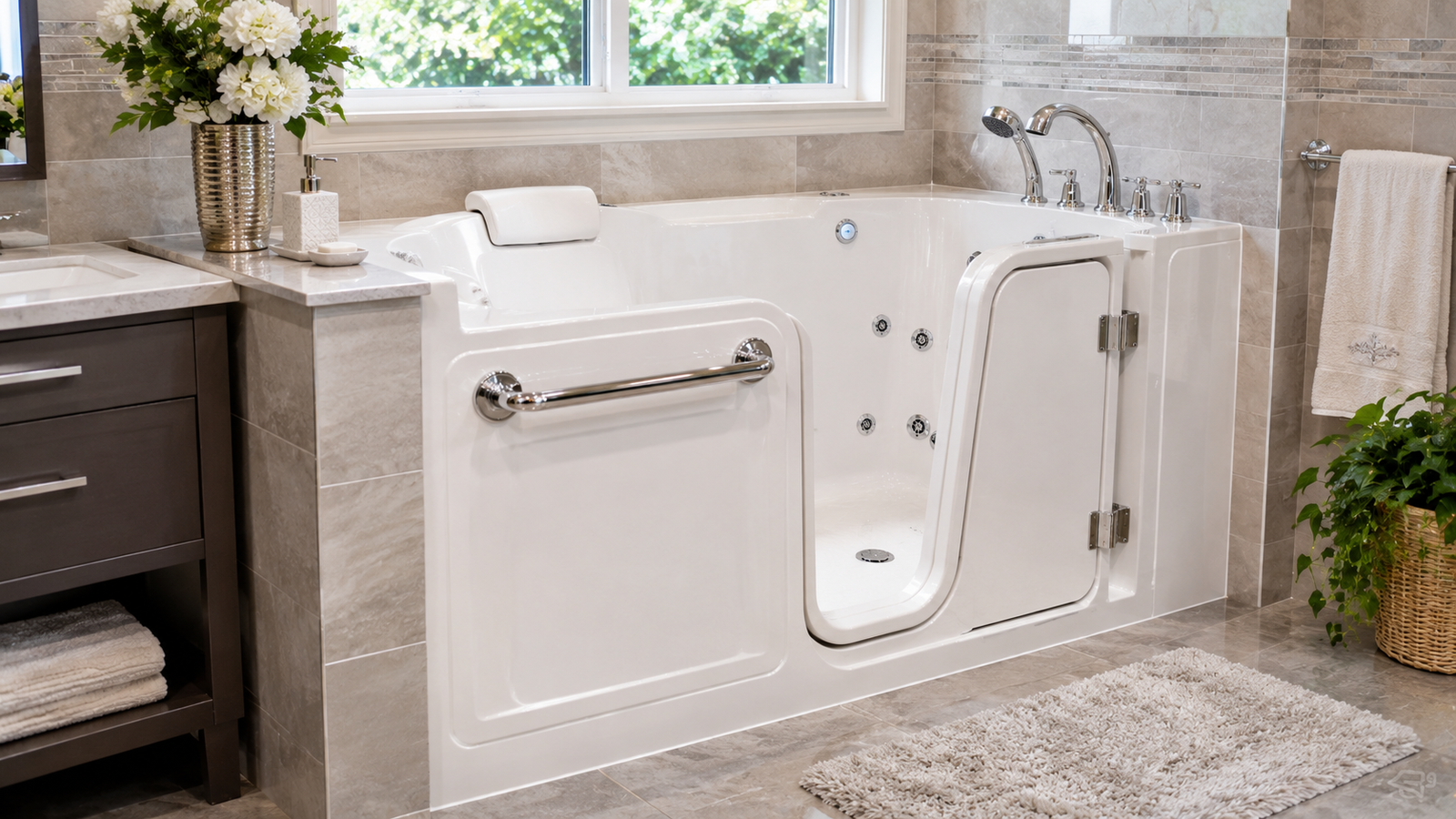
For aging adults opting to age in place, bathroom modifications represent the single most important safety upgrade. Walk-in tubs eliminate the dangerous 14-to-18-inch step-over barrier of traditional bathtubs, drastically reducing slip-and-fall hazards while providing therapeutic hydrotherapy benefits for arthritis and mobility impairments.
Average Walk-In Tub Costs by Feature Tier (2026 Benchmarks)
The total investment for a walk-in tub consists of two distinct components: the manufactured tub unit and specialized residential installation labor.
| Tub Category | Equipment Price | Total Cost Installed |
|---|---|---|
| Basic Soaking Tub | $2,200 – $4,500 | $4,500 – $7,500 |
| Hydrotherapy Water Jet Tub | $4,000 – $7,500 | $7,000 – $11,500 |
| Dual Jetting (Air + Water Hydrotherapy) | $6,000 – $10,500 | $9,500 – $15,000 |
| Bariatric / Wheelchair Accessible Slide-In | $7,500 – $13,000 | $12,000 – $18,500 |
Breakdown of Installation Labor & Electrical Retrofitting
Installing a walk-in tub is rarely a simple drop-in replacement. Existing bathroom infrastructure must accommodate substantial plumbing and electrical upgrades:
- Demolition and Disposal: Removing old cast-iron or fiberglass tubs, repairing drywall, and checking subfloor integrity ($600 – $1,200).
- Dedicated 20-Amp GFCI Circuit: Dual-jet models and inline water heaters require one to two dedicated 110V/220V electrical circuits from your main breaker panel ($800 – $1,500).
- Water Heater Expansion: Walk-in tubs require 50 to 80 gallons of hot water to fill. Homes with standard 40-gallon water heaters often require a 50+ gallon hybrid or tankless booster upgrade ($1,200 – $2,500).
- Quick-Drain Plumbing: Specialized gravity or pump-assisted fast-drain systems prevent seniors from waiting in cold water for 10 minutes ($500 – $900).
Does Medicare or Medicaid Pay for Walk-In Tubs?
Original Medicare (Part A and Part B) classifies walk-in tubs as convenience items rather than Durable Medical Equipment (DME). Consequently, Medicare does not provide direct reimbursement for standard tub purchases.
However, alternative financial assistance pathways exist:
- Medicare Advantage (Part C): Select chronic illness and Special Needs Plans (SNPs) offer supplemental home modification allowances that contribute toward bathroom safety upgrades.
- VA Grants (HISA & SAH): Veterans with service-connected disabilities can secure Home Improvements and Structural Alterations (HISA) grants up to $6,800, or up to $2,000 for non-service-connected conditions.
- Medical Expense Tax Deductions: If prescribed by a physician as a medical necessity for a degenerative joint or mobility disorder, equipment and installation costs can be deducted under IRS Medical Expense rules (Schedule A).
2026 Walk-In Tub Cost Breakdown: Unit Tiers, Installation, and Upgrades
Walk-in tub advertisements often showcase unit-only prices, yet plumbing, electrical, and carpentry adjustments typically account for 35% to 50% of the final turnkey contract. In 2026, complete installed pricing falls into three clear tiers:
- Basic Soaker Walk-In Tub ($4,500 to $7,500 installed): Unit costs $2,200 to $4,000. Includes an inward- or outward-swinging watertight door, low threshold, grab bar, and built-in contoured seat without motorized massage jets.
- Hydrotherapy Air/Whirlpool Tub ($7,500 to $12,500 installed): Unit costs $3,800 to $7,500. Adds dual air-bubble and water-jet pumps, inline water heater to keep bathwater warm, and chromotherapy lighting.
- Bariatric or Wheelchair-Transfer Tub ($11,000 to $16,500+ installed): Unit costs $7,000 to $11,000. Features wider 30- to 36-inch frames, slide-in outward doors for wheelchair lateral transfers, and twin rapid-drain pumps.
Budget carefully for hidden utility upgrades that sales reps sometimes leave off initial flyers: upgrading an existing 40-gallon water heater to a 65- to 80-gallon tank or tankless unit ($1,200 to $3,200) so a 50- to 80-gallon tub fills completely hot, running dedicated 20-amp GFCI circuits for jet blowers and heated seats ($350 to $800), and widening narrow bathroom doorways to 32 or 36 inches ($600 to $1,800).
Safety and Hydrotherapy Specs Worth Prioritizing
Because bathers must remain seated inside the tub until water drains completely below the door seal, drain speed and thermal safety matter far more than decorative trim:
- Fast-Fill Valves and Dual/Power Drains: Standard tub spouts take 10+ minutes to fill a deep walk-in basin; look for 12 to 18 GPM high-flow valves and dual 2-inch gravity drains or electric pump-assisted drains that empty the tub in 60 to 120 seconds instead of 6 to 10 minutes.
- Step-In Threshold and Anti-Scald Controls: Choose a 3- to 7-inch threshold (versus 15 to 18 inches on standard alcoves) paired with an ASSE-certified thermostatic mixing valve capped at 120°F to prevent accidental scalding.
- Heated Seat and Backrest: Because you sit inside the tub during both filling and draining, heated backrests prevent chilling before warm water reaches shoulder height.
Walk-In Tub vs. Curbless Roll-In Shower: Mobility and Resale Tradeoffs
Before committing $10,000+, weigh whether a curbless roll-in shower ($6,000 to $14,000 installed) serves your household better long term. Walk-in tubs excel for seniors who can still pivot safely onto a 17-inch seat and want warm hydrotherapy immersion for arthritis or lower-back stiffness, and they fit cleanly inside existing 60-by-30-inch alcove footprints. However, if progressive mobility loss eventually requires two-caregiver bathing assistance or a rolling shower commode chair, an open curbless shower eliminates the 5- to 10-minute fill-and-drain wait completely and generally appeals more broadly to future homebuyers when reselling.
Medicare Rules, VA Grants, and Tax Deductions That Reduce Net Cost
Most seniors pay out of pocket, but targeted federal programs and tax provisions can offset thousands of dollars:
- Original Medicare vs. Medicare Advantage: Original Medicare does not classify walk-in tubs as Durable Medical Equipment (DME) and will not reimburse them. However, select Medicare Advantage (Part C) plans offer annual home-safety or bathroom-modification allowances ranging from $500 to $2,000 with prior authorization.
- VA HISA Grants: Eligible veterans can apply for Home Improvements and Structural Alterations (HISA) grants—up to $6,800 for service-connected conditions or $2,000 for non-service-connected disabilities—specifically covering accessible roll-in showers or walk-in tubs.
- Medicaid Waivers and IRS Deductions: State Medicaid HCBS waivers sometimes fund medically necessary bathroom adaptations, and taxpayers who itemize can deduct qualifying medical equipment costs exceeding 7.5% of Adjusted Gross Income (AGI) with a physician’s letter of medical necessity.
Recommended U.S. Cost & Coverage Guides