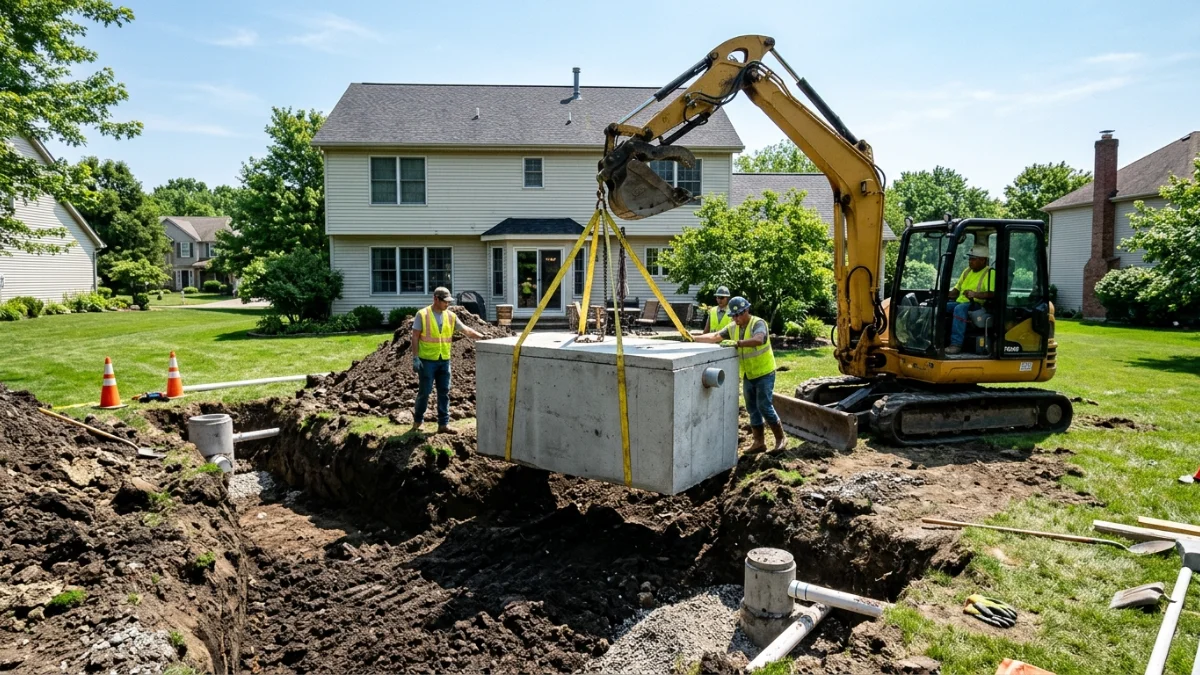
Over 21 million U.S. households rely on private onsite wastewater treatment systems rather than municipal sewer lines. When a concrete, fiberglass, or polyethylene tank cracks from root intrusion, baffle failure, or hydraulic overload, understanding the true 2026 septic tank replacement cost and licensed local excavation contractor quotes is essential before digging begins. Whether you are evaluating the cost of septic tank replacement for a failed real estate point-of-sale inspection or using a septic tank replacement cost calculator to budget for an aerobic treatment unit, separating tank hardware from drain field excavation can save you $2,500 to $5,000.
2026 Average Septic Tank Replacement Cost Summary (U.S. National Averages)
- Septic Tank Replacement Only (Existing Drain Field Intact): $4,200 to $9,500 installed (median U.S. cost: $6,450 for a 1,000-to-1,250-gallon precast concrete or poly tank).
- Full Septic System + Leach Field Replacement: $10,500 to $24,000 for a conventional gravity system.
- Engineered Mound or Aerobic Treatment Unit (ATU): $15,000 to $32,000+ (required for high water tables, shallow bedrock, or slow-percolating clay soils).
- Percolation Test, Soil Boring & County Health Permit: $650 to $1,950 prior to excavation.
How Much Does It Cost to Replace a Septic Tank by Size & Material in 2026?
When homeowners ask how much does it cost to replace a septic tank, county health department codes dictate the minimum tank capacity based on the number of bedrooms in the home—not the number of current occupants. Across most U.S. jurisdictions in 2026, a 3-bedroom home requires a minimum 1,000-gallon dual-compartment tank, while a 4-bedroom home requires a 1,250-to-1,500-gallon tank. Here is the 2026 average septic tank replacement cost by gallon capacity and tank material:
| Home Size / Tank Capacity | Tank Material Only | Turnkey Tank Replacement Cost | Full Tank + Leach Field Cost |
|---|---|---|---|
| 1–2 Bedrooms (750 Gallons) | $1,100 – $1,950 | $3,600 – $6,200 | $8,500 – $14,500 |
| 3 Bedrooms (1,000 Gallons) | $1,450 – $2,600 | $4,500 – $7,800 | $10,500 – $18,500 |
| 4 Bedrooms (1,250 Gallons) | $1,800 – $3,200 | $5,400 – $9,200 | $12,800 – $22,000 |
| 5+ Bedrooms (1,500+ Gallons) | $2,300 – $4,100 | $6,800 – $11,500 | $15,500 – $27,500 |
Septic Tank Replacement Cost Calculator: Itemized Labor & Permit Fees
When reviewing the cost of septic tank replacement on an excavation contractor’s bid, make sure every line item is clearly specified so you are not hit with mid-project change orders:
- Decommissioning & Crushing the Old Tank ($750 – $1,850): Before removing or abandoning an old concrete or rusted steel septic tank, a licensed pumper truck must pump out all septage ($350–$600). Depending on county environmental rules, the old tank is either lifted out by crane and hauled to a disposal facility or had its lid crushed in place and filled with compacted sand or pea gravel.
- Precast Concrete vs. HDPE Plastic vs. Fiberglass Tanks:
- Precast Concrete ($1,500 – $2,900): Heavy (7,000 to 10,000 lbs), immune to floating in high groundwater tables, and lasts 40+ years, but requires a boom crane truck for placement.
- High-Density Polyethylene / Plastic ($1,200 – $2,300): Lightweight, rustproof, and immune to hydrogen sulfide gas corrosion, though it requires concrete anti-flotation anchors in wet soils.
- Fiberglass ($1,800 – $3,400): High structural strength without concrete cracking risks, ideal for tight-access lots where crane trucks cannot maneuver.
- Risers, Effluent Filters & Distribution Box ($450 – $1,200): Modern codes require bringing 20-to-24-inch watertight poly risers flush to ground grade so future pumping never requires digging up your lawn, along with an NSF-certified outlet effluent filter to protect the leach field.
- Leach Field / Drain Field Replacement ($4,500 – $12,500): If biomat sludge has clogged the gravel absorption trenches, replacing the distribution box (D-box) and installing gravelless Infiltrator chambers or perforated lateral pipes is required. If tree roots invaded your old sewer or drain lines, see our professional tree removal and root clearance guide and our 2026 French drain curtain drainage guide (since surface rainwater must always be diverted away from a septic drain field).
USDA Section 504 Grants, Clean Water State Revolving Funds & Tax Credits
Replacing a failed septic system qualifies for several state and federal financial assistance programs in 2026: (1) Low-income rural seniors (age 62+) can apply for USDA Single Family Housing Repair Grants (Section 504) offering up to $10,000 in lifetime grant funds (and up to $40,000 in 1% fixed-interest loans) to fix health and sanitation hazards; (2) several states offer 0% to 2% low-interest septic replacement loans through EPA Clean Water State Revolving Fund (CWSRF) programs; and (3) Massachusetts homeowners can claim up to an $18,000 Title 5 state tax credit over multiple tax years.
Homeowners financing a major septic overhaul alongside other property upgrades can also compare 2026 fixed home equity loan rates (since a new septic system qualifies as a capital home improvement under IRS rules). Before hiring an excavator, compare 3 licensed septic system installation quotes in your county to lock in turnkey pricing.
Frequently Asked Questions (2026 US Consumer Guide)
1. Can I replace just the septic tank without replacing the leach field?
Yes—if a county sanitarian or licensed septic inspector confirms that your existing drain field passes a hydraulic load test and has no biomat saturation or surface effluent breakout, replacing only the cracked or corroded tank costs $4,200 to $9,500 instead of $15,000+.
2. Does homeowners insurance or a home warranty cover septic tank replacement?
Standard homeowners insurance policies rarely cover septic tank replacement caused by age, wear, or root intrusion. However, many comprehensive home warranty plans with an optional septic system add-on—reviewed in our best home warranty plans guide—cover septic sewage ejector pumps, aerobic air compressors, and main line blockages up to policy limits.
3. How long does it take to replace a septic tank?
Once the county health department issues the installation permit and soil percolation approval (which takes 1 to 3 weeks), the physical excavation, tank placement, plumbing hookup, and final open-trench inspection take only 1 to 3 days.
4. How long does a new concrete vs. plastic septic tank last?
A precast concrete septic tank lasts 40 to 50+ years when pumped every 3 to 5 years, while a high-density polyethylene (HDPE) or fiberglass tank can last 50+ years because it never corrodes from sewer gas acids.
Recommended U.S. Cost & Coverage Guides
- Radon Mitigation System Cost in 2026: Sub-Slab Depressurization & Installation Guide
- Commercial Water Damage Restoration & Structural Drying in 2026: IICRC Standards, Insurance Direct Billing, and Cost per Square Foot
- Industrial Metal Roofing & TPO Commercial Roof Replacement in 2026: Cost per Square Foot, Warranties, and Contractor Bids
- Tankless Water Heater Replacement Costs 2026: Gas vs. Electric, GPM Sizing, and Energy Star Tax Rebates