
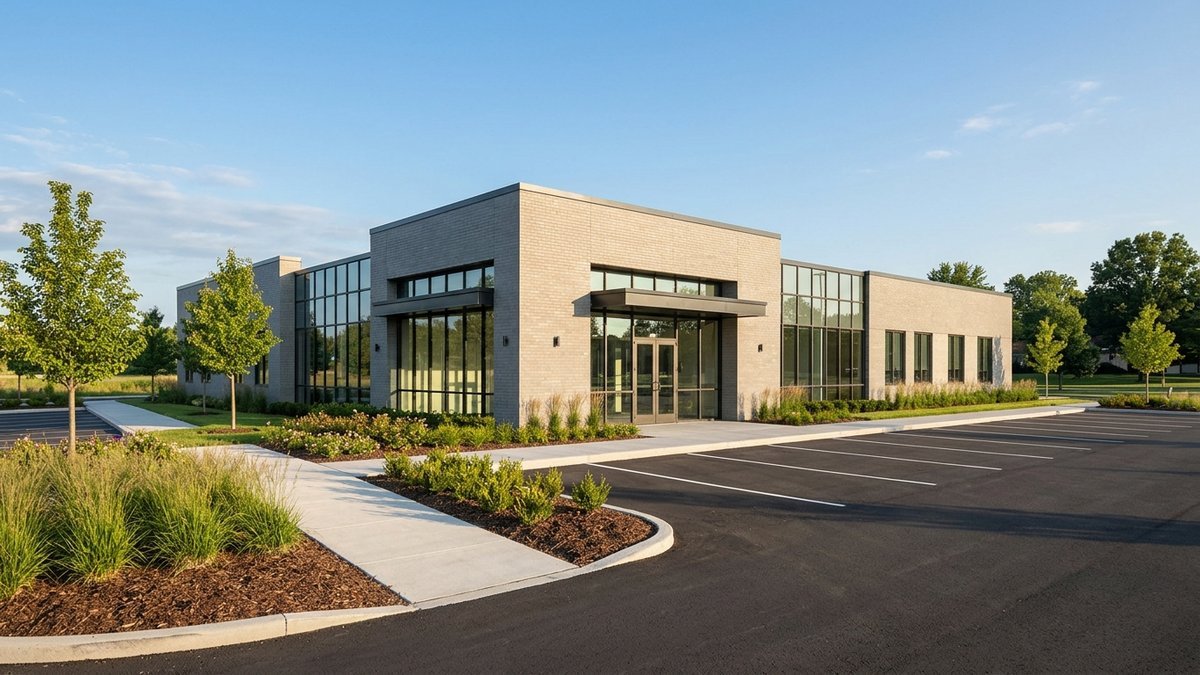
Whether you own a free-standing medical clinic, manage a multi-tenant strip shopping center, or lease an industrial flex warehouse for equipment assembly, your real estate and physical inventory represent the financial foundation of your enterprise. A single electrical fire, catastrophic roof collapse from heavy winter snow loads, or sudden plumbing rupture can wipe out millions in specialized equipment and shut down operations for months. Because general liability policies exclude damage to your own owned or leased premises, commercial property insurance is indispensable. Here is a comprehensive 2026 guide to commercial property insurance cost, valuation models, and policy endorsements.
Quick Takeaway: 2026 Commercial Property Benchmarks
In 2026, the national median commercial property insurance cost ranges from $65 to $195 per month ($780 to $2,340 per year) per $1,000,000 of covered structural replacement value. For standard small commercial properties with $1.5M in building value and $300,000 in contents, total annual premiums average $1,850 to $3,400. Coastal hurricane zones (Florida, Texas Gulf) face elevated rates of $4,500 to $9,000+ driven by separate 2% to 5% percentage windstorm deductibles.
2026 Commercial Property Rates Across Major Building Use Types
Underwriters evaluate commercial property premiums primarily through the COPE framework (Construction, Occupancy, Protection, and Exposure):
| Property Type & Occupancy | Rate per $100 Total Insured Value | Average Annual Premium ($1M Building) | Primary Underwriting Risk |
|---|---|---|---|
| Professional Office Suite / Law Firm / Tech | $0.12 – $0.22 | $1,200 – $2,200 | Water pipe bursts, electronics, clean fire suppression |
| Retail Storefront / Dry Goods Boutique | $0.18 – $0.32 | $1,800 – $3,200 | Theft, glass breakage, inventory seasonal buildup |
| Commercial Restaurant / Commercial Kitchen | $0.45 – $0.85 | $4,500 – $8,500 | Grease duct fires, deep fryer hazards, spoilage |
| Light Industrial / Flex Warehouse | $0.24 – $0.42 | $2,400 – $4,200 | High ceiling fire spread, forklift impact, heavy power |
Pro Tip: Replacement Cost (RCV) vs. Actual Cash Value (ACV)
Never insure commercial structures on an Actual Cash Value (ACV) basis to save 15% on premiums. ACV deducts years of physical depreciation. If your 18-year-old commercial TPO roof is destroyed by hail, an ACV policy will pay only 25% of the replacement expense, leaving your business on the hook for an out-of-pocket $60,000 gap. Always insist on Replacement Cost Value (RCV) with an agreed value endorsement.
Essential Endorsements: Ordinance or Law and Utility Services
Standard commercial property policies only pay to repair what was physically destroyed back to its original condition. However, municipal building codes evolve. Two critical endorsements bridge this financial gap:
- Ordinance or Law Coverage: If local city codes require that your rebuilt facility install ADA handicap ramps, an automatic fire sprinkler network, or updated electrical panels, standard property coverage pays $0 for code upgrades. Ordinance or Law coverage pays up to $250,000+ for mandatory municipal compliance costs.
- Utility Services Direct Damage & Time Element: If an off-premises municipal power transformer blows three miles away, cutting power to your warehouse and spoiling refrigerated goods, standard property excludes it because damage occurred off-site. This endorsement reimburses spoilage and lost income from off-site utility interruptions.
- Inflation Guard Endorsement: Automatically increases building coverage limits by 4% to 8% annually to keep pace with soaring post-disaster construction labor and raw materials inflation.
Business Interruption & Extra Expense: Protecting Your Cash Flow
While standard building coverage repairs scorched masonry walls and charred structural rafters, physical rebuilding takes 6 to 14 months. Without revenue, how will you pay mortgage installments, executive salaries, and key vendor retainers? Business Interruption Insurance (Business Income Coverage) reimburses:
- Net Lost Operating Profits: Calculated based on your past 12 months of profit-and-loss tax returns.
- Ongoing Fixed Operating Overhead: Commercial mortgage payments, utility connectivity fees, and municipal property taxes.
- Key Employee Payroll: Retaining critical management, master craftsmen, and licensed technicians so they aren’t hired away by competitors during rebuilds.
- Extra Expense Coverage: Leasing temporary mobile office trailers or warehouse space to continue serving clients during construction.
Foire Aux Questions (FAQ) / Frequently Asked Questions
What is the Coinsurance Clause and how can it penalize a claim?
Most commercial policies require an 80%, 90%, or 100% coinsurance clause. This requires you to maintain coverage equal to at least that percentage of the property’s true replacement value. If your building would cost $2,000,000 to rebuild, but you only insured it for $1,000,000 under an 80% coinsurance requirement, you carried only 62.5% of the required $1.6M minimum. Following a partial $200,000 fire loss, the insurer will pay only $125,000 ($200,000 × 62.5%), penalizing you with a $75,000 out-of-pocket shortfall.
Are floods and earthquakes covered under standard property policies?
No. Rising groundwater, storm surges, and seismic tremors are universally excluded from standard commercial property policies. Commercial flood insurance must be purchased separately through the National Flood Insurance Program (NFIP) or private surplus-lines underwriters (costing $1,800 to $6,500 annually).
Can I bundle commercial property into a Business Owner’s Policy (BOP)?
Yes. If your company qualifies as a small-to-midsize low-hazard business (under $5M in annual revenue and under 100 employees), bundling commercial property with general liability in a Business Owner’s Policy (BOP) typically discounts your combined premiums by 15% to 25% compared to purchasing standalone monoline policies.
Recommended U.S. Cost & Coverage Guides
- Hardship Loans & Emergency Financing (2026): Credit Union Rates, 401(k) Rules & Pitfalls
- Debt-to-Income (DTI) Ratio Calculator & Underwriting Thresholds (28/36 Rule)
- Vehicle Insurance Quotes Guide: Coverage Tiers, Rates & Best Quotes
- Home Mortgage Calculator: Payment Breakdown & Amortization Formula


