A collapsed, root-choked, or severely corroded main sewer lateral is one of the most stressful emergencies a homeowner can face. In 2026, the national average trenchless sewer line replacement cost ranges between $6,000 and $12,500, or roughly $80 to $250 per linear foot depending on line depth, pipe diameter, and whether your property requires cured-in-place pipe (CIPP) lining or pneumatic pipe bursting. While the upfront plumbing estimate for trenchless rehabilitation is frequently comparable to traditional open-cut trenching, trenchless technology eliminates the catastrophic $4,000 to $15,000 expense of excavating driveways, mature trees, hardscapes, and municipal sidewalks.
2026 Trenchless Sewer Line Replacement Cost Benchmarks
- National Average Job Cost: $8,750 (typical 40-to-60 foot residential lateral running from house foundation to city main).
- Price Per Linear Foot: $80 – $250 / ft across both CIPP epoxy lining and directional pipe bursting methods.
- CIPP Epoxy Relining Average: $90 – $180 per foot (best for cracked, root-damaged, or pinholed pipes that still possess structural shape).
- Pipe Bursting (HDPE) Average: $100 – $240 per foot (best for fully collapsed, belly-sagged, or severely fractured clay and cast iron lines).
- Traditional Open-Trench Excavation: $50 – $130 per foot (plus $4,000 – $15,000+ in mandatory landscape, deck, and concrete restoration).
- Typical Project Duration: 4 to 8 hours for trenchless installations versus 3 to 7 days of open-trench digging and yard destruction.
Trenchless Sewer Replacement Cost Breakdown: Pipe Bursting vs. CIPP Relining vs. Open-Trench
When obtaining estimates from licensed master plumbers and underground civil contractors, you will evaluate two distinct trenchless methodologies alongside traditional mechanical excavation. Understanding the structural differences and site requirements of each method prevents paying for unnecessary digging or selecting an incompatible relining solution.
| Methodology | Cost Per Linear Foot | Typical Total Project (50 Ft) | Landscape Disruption | Expected Lifespan | Best Practical Application |
|---|---|---|---|---|---|
| CIPP Epoxy Relining (Trenchless) | $90 – $180 / ft | $6,500 – $9,800 | Virtually None (Single 3×3 ft entry access cleanout) | 50+ Years (Seamless jointless epoxy) | Cracked clay/cast iron, root intrusion, micro-fractures |
| Pipe Bursting (HDPE Trenchless) | $100 – $240 / ft | $7,500 – $12,500 | Minimal (Small entry and exit pits) | 100+ Years (High-Density Polyethylene) | Completely collapsed pipes, upside sizing (4″ to 6″) |
| Traditional Open-Trench Excavation | $50 – $130 / ft (pipe only) | $11,000 – $22,000+ (including restoration) | Extreme (Backhoe trenches across lawn, drive, porch) | 50–75 Years (PVC Schedule 40) | Extreme slope failure, shallow open yard, brand new build |
How CIPP Epoxy Relining Works
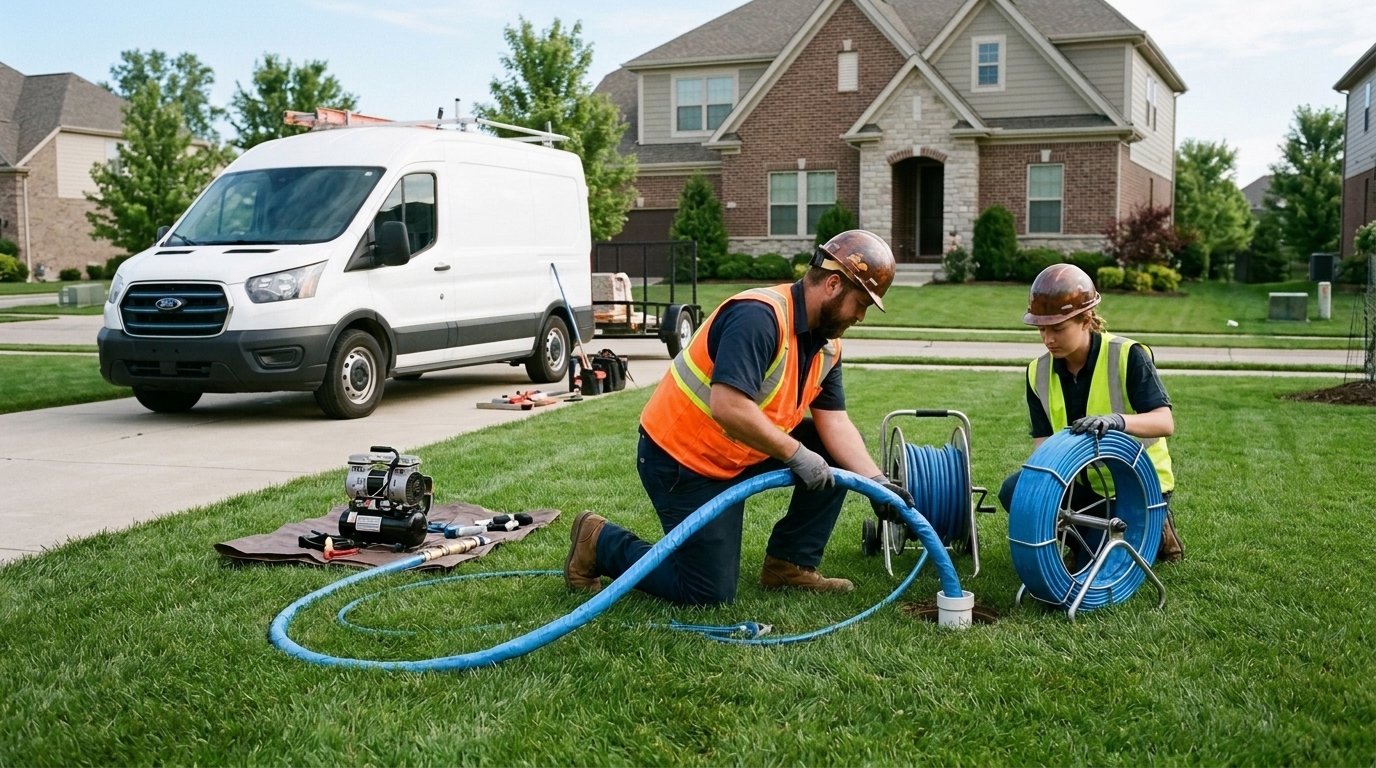
Cured-In-Place Pipe (CIPP) lining is an engineering marvel that creates a brand-new, ultra-smooth pipe inside your deteriorating host sewer lateral without excavating a continuous ditch across your lawn. The process begins with a high-definition CCTV video pipe inspection to locate bellies, cracks, root balls, and municipal connections. Next, contractors deploy high-pressure hydro-jetting equipment (up to 4,000 PSI) and mechanical milling cutters to blast away scale, calcification, and tree roots.
Once cleaned, a resin-saturated felt tube (epoxy thermosetting resin) is inverted or pulled into the host lateral using pressurized air or water. Technicians cure the liner using ambient air, circulated hot water, or ultraviolet (UV) light curing rigs in 2 to 4 hours. The resulting inner pipe is 100% seamless, impervious to root intrusion, resistant to chemical corrosion, and backed by a 50-year manufacturer warranty.
How Pipe Bursting Works
If your sewer line has suffered a catastrophic structural collapse, severe ovality, or complete section loss where an epoxy sleeve cannot maintain integrity, pipe bursting is the premier trenchless replacement technique. Plumbers excavate two modest access pits (usually 3×4 feet): an insertion pit near the foundation and a reception pit at the property line cleanout or municipal connection.
A heavy-duty hardened steel expander bursting head is threaded through the old pipe with high-tensile steel pulling cables driven by a hydraulic winching unit. As the pneumatic or hydraulic expander head pulls through, it shatters the brittle old clay, cast iron, or Orangeburg pipe outward into the surrounding soil. Simultaneously, it pulls a brand-new, seamless, flexible, heavy-duty High-Density Polyethylene (HDPE) DR17 pipe directly into the newly created void. HDPE pipe joints are thermally fused, making the line 100% leak-proof and virtually indestructible for over 100 years.
Crucial Cost Factor: Municipal Right-of-Way vs. Private Property Lateral
Homeowners are legally and financially responsible for the sewer lateral extending from their house exterior wall to the municipal main connection or curb line (often termed the “upper lateral”). If the structural fracture extends under the public roadway or sidewalk (the “lower lateral”), municipal encroachment permits, street excavation bonds, and certified traffic control details can add $3,000 to $8,500 to your project. Always verify your municipal sewer lateral boundary ordinance before signing contracts.
Cost Factors Influencing Your 2026 Trenchless Sewer Bid
- Total Linear Footage: Standard residential laterals span 35 to 75 feet. Most sewer contractors charge a minimum job mobilization fee of $4,500 to $6,000 regardless of whether the repair is 20 feet or 40 feet.
- Depth of Host Pipe: Sewer pipes buried 3 to 5 feet deep require simple hand-dug access pits. Laterals buried 8 to 14 feet deep in basement regions require shoring, trench safety boxes, and additional labor.
- Number of Branch Connections: If your lateral has secondary fixture branches tied into the main line under your house floor slab, robotic robotic reinstatement cutters ($400 to $800 per tie-in) are required to reopen branch orifices after CIPP relining.
- Camera Inspection & Hydro-Jetting Pre-Clean: Professional CCTV sewer camera diagnosis costs $250 to $500, but is universally credited back into your final project invoice when you award the relining contract.
To evaluate quotes from vetted, licensed, and insured local underground plumbing specialists, compare trenchless sewer replacement contractors and schedule your camera inspection today.
Frequently Asked Questions (2026 Homeowner Guide)
1. Does homeowner insurance cover trenchless sewer line replacement?
Standard HO-3 and HO-5 homeowners insurance policies specifically exclude wear and tear, root intrusion, and gradual aging of sewer lines. However, if you have added a Service Line Endorsement (often available for just $30 to $60 per year with insurers like State Farm, Travelers, and USAA), it covers up to $10,000 to $20,000 of underground sewer lateral repair after a modest $500 deductible.
2. Can all damaged sewer pipes be repaired with trenchless CIPP lining?
No. CIPP relining requires that the existing host pipe retains at least 50% to 60% of its circular structural geometry. If the pipe has completely collapsed, possesses reverse slope bellies that hold standing water, or has separated at joints by several inches, pipe bursting or spot-excavation is mandatory.
3. How long does a trenchless sewer replacement take from start to finish?
The vast majority of residential trenchless sewer installations are completed in a single working day (typically 6 to 9 hours). Homeowners only experience water service shutoff for roughly 4 to 6 hours during the hydro-jetting and liner curing phase.
4. Will trenchless relining decrease the inside diameter of my sewer pipe?
CIPP liners reduce the inside pipe diameter by merely 4 to 6 millimeters (roughly 1/4 inch). Because cured epoxy resin features an ultra-low Manning’s roughness coefficient (0.009 vs. 0.015 for rough cast iron), fluid velocity and total wastewater discharge capacity actually increase by 20% to 30%!
Recommended U.S. Cost & Coverage Guides