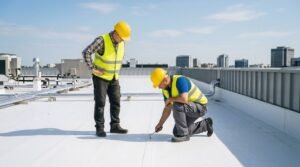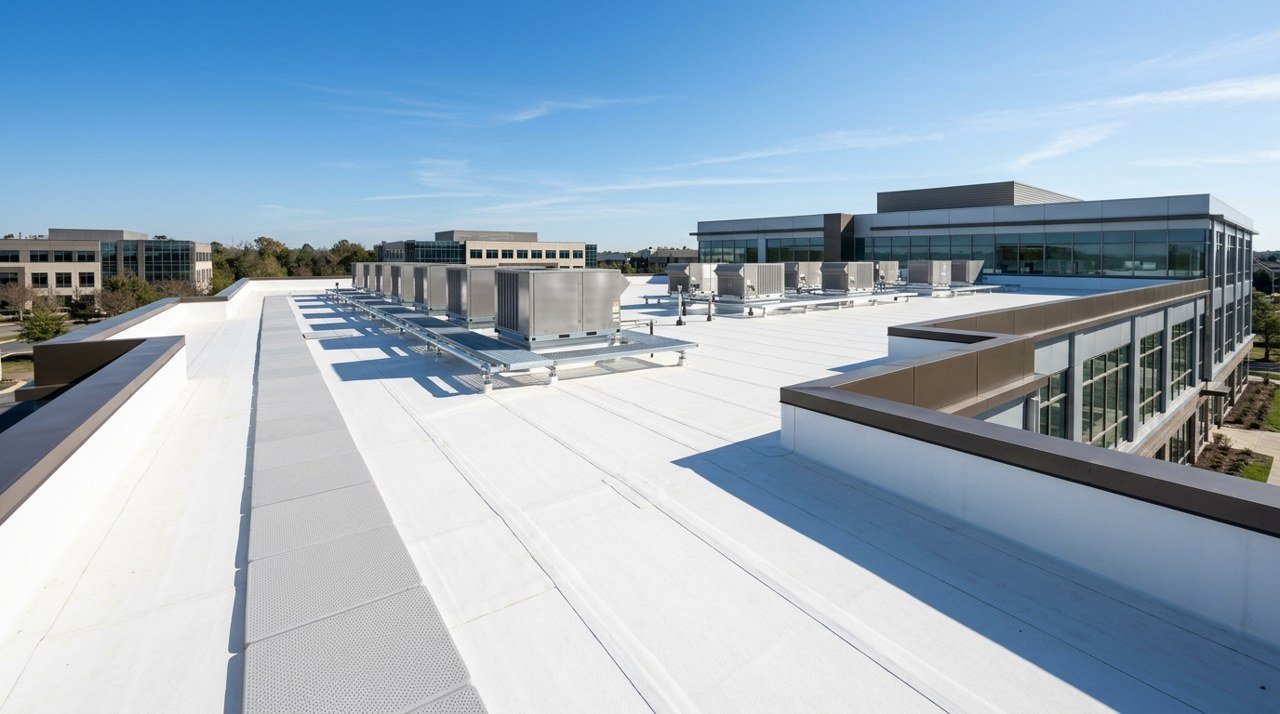
Average Commercial Roofing Cost in 2026: Hiring a licensed commercial roofing company for a full flat-roof replacement typically costs $6.50 to $14.50 per square foot (or $65,000 to $145,000 for a 10,000 sq. ft. warehouse, retail strip, or office building), depending on tear-off scope, R-value insulation code upgrades, and membrane choice. When the existing insulation is dry, a commercial silicone or acrylic roof restoration coating ($3.25–$5.50/sq. ft.) can defer replacement by 10–15 years and is often 100% tax-deductible as maintenance.
2026 Commercial Roofing System Cost & Lifespan Comparison
Commercial buildings with low-slope decks require engineered single-ply membranes, metal standing-seam retrofits, or fluid-applied systems designed to handle rooftop HVAC traffic, grease vents, and ponding water:
| Commercial Roof System | Installed Cost / Sq. Ft. | 10,000 Sq. Ft. Project | Service Life & Best Use |
|---|---|---|---|
| TPO Single-Ply (60–80 mil) | $6.50 – $10.50 | $65,000 – $105,000 | 22–30 yrs; top choice for warehouses & retail |
| EPDM Rubber (60–90 mil) | $6.25 – $10.00 | $62,500 – $100,000 | 25–35 yrs; cold climates & hail resistance |
| PVC Membrane (Heat-Welded) | $8.50 – $13.50 | $85,000 – $135,000 | 25–35 yrs; restaurants (grease/chemical resistant) |
| Silicone Roof Coating (Restoration) | $3.25 – $5.50 | $32,500 – $55,000 | 10–15 yrs added; zero tear-off business disruption |
5 Non-Negotiable Clauses When Vetting a Commercial Roofing Company
- Manufacturer Master / Elite Certification + NDL Warranty: Require a 20-year No-Dollar-Limit (NDL) manufacturer warranty from Carlisle, Firestone/Elevate, GAF, or Johns Manville—this guarantees the manufacturer pays 100% of labor and materials if the roof leaks, even if the installing contractor goes out of business.
- $2M–$5M General Liability + Commercial Workers’ Comp: Ask to be named as an Additional Insured on the certificate of insurance before cranes or kettles arrive on site.
- Infrared Moisture Scan Before Bidding: Never accept a blind overlay quote; a $600–$1,200 infrared scan pinpoints wet insulation sections that building codes forbid covering over.
- Unit Pricing for Decking & Wet Polyiso Replacement: Every bid should state a fixed per-square-foot or per-sheet unit price for replacing rusted steel decking or saturated insulation discovered during tear-off so change orders don’t explode your budget.
- Energy Code R-Value Compliance: Full replacements in most U.S. climate zones now mandate R-25 to R-30 continuous polyiso insulation plus tapered crickets around rooftop units.
Tax Advantage: Section 179 vs. Immediate Repair Deduction
Under IRS rules, a full commercial roof replacement qualifies for 100% Section 179 expensing (subject to annual business income and cap limits) on non-residential real property, while a seamless elastomeric or silicone roof restoration coating generally qualifies as an immediate ordinary repair expense—improving cash flow in the same tax year without disturbing tenants below.
Frequently Asked Questions
How long does a 10,000 sq. ft. commercial roof replacement take?
Most experienced commercial roofing crews complete a 10,000 sq. ft. tear-off, tapered insulation install, and heat-welded TPO or PVC system in 5 to 9 business days with minimal noise disruption to ground-floor operations.
Can you coat an aging commercial metal or TPO roof instead of replacing it?
Yes, provided an infrared moisture scan confirms at least 75%–80% of the underlying insulation is dry and structurally sound; wet areas are cut out and patched before applying seamless silicone.
Annual Commercial Roof Maintenance Plan to Protect Your NDL Warranty
Even the strongest 20-year NDL commercial roof warranty can be voided if a building owner neglects routine upkeep or lets third-party HVAC technicians puncture the membrane without certified repairs. Schedule semi-annual inspections every spring and fall with your commercial roofing company ($350–$750 per visit on a typical 10,000 sq. ft. building) to clear leaves and debris from scuppers and interior drains, reseal pitch pockets around conduit pipes, verify rooftop walkway pads under air-conditioning units, and document every HVAC contractor visit. Keeping a dated photo log and maintenance invoice trail preserves full manufacturer warranty coverage and catches $400 seam splits before they turn into $25,000 wet-insulation tear-offs. When collecting three competing commercial bids, ask each contractor to break out tear-off disposal, tapered insulation thickness, flashing metal gauge, and NDL warranty registration fees on separate lines so you can compare true apples-to-apples value before awarding the contract.
What is the best time of year to hire a commercial roofing company?
Late spring through early fall (May to October) offers the driest, warmest weather for heat-welded TPO/PVC seams, adhesive curing, and silicone roof coatings—however, booking your commercial roofing inspection in late winter or early spring often secures 5%–10% better contractor pricing and faster crew scheduling before peak summer storm backlogs hit. Always verify that your commercial roofing company holds an active state contractor license, commercial general liability coverage, and workers’ compensation insurance for every crew member on your roof before signing a notice to proceed. Request at least two local commercial property references completed within the past three years so you can verify workmanship quality and post-installation leak response times firsthand. Putting a clear written warranty maintenance schedule in place from day one also protects your building’s resale valuation and prevents surprise capital assessments later.
Recommended U.S. Cost & Coverage Guides
- Roof Cap & Ridge Cap Shingles Cost (2026): Venting, Repair & Replacement
- Heat Pump HVAC Replacement Cost (2026): 25C Tax Credit & SEER2 Sizing
- Commercial Roofing: Types, Cost Per Square Foot & Installation Guide
- Mold Remediation Cost in 2026: Basement, Attic & Crawl Space Removal Prices Per Square Foot