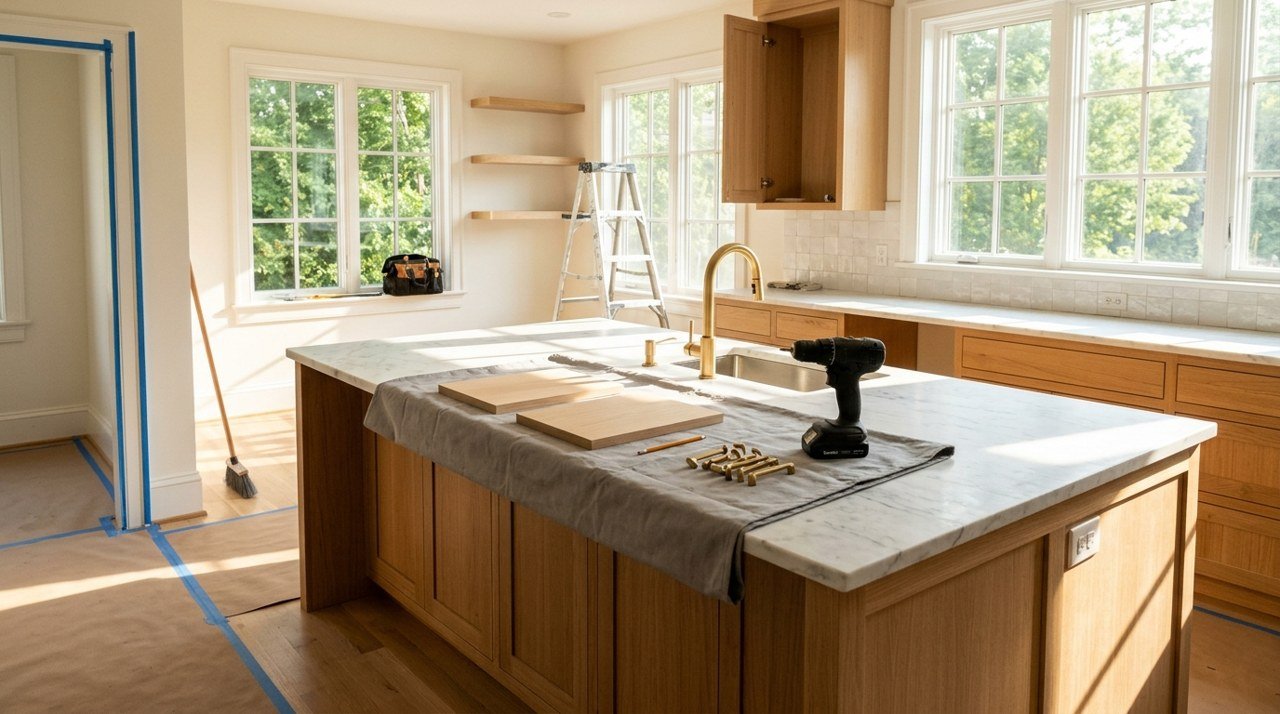
How 2026 HELOC Rates Are Priced: Most Home Equity Lines of Credit (HELOCs) carry a variable APR tied to the Wall Street Journal Prime Rate plus a lender margin (typically Prime – 0.50% to Prime + 1.50%, landing around 7.25% to 9.25% APR for borrowers with 720+ credit and ≤80% Combined Loan-to-Value). Unlike a fixed home equity loan, you pay interest only on the dollar balance you actually draw.
HELOC vs. Home Equity Loan vs. Cash-Out Refinance (2026)
| Equity Option | Rate Structure | Upfront Closing Costs | Best Use Case |
|---|---|---|---|
| HELOC (Revolving Credit Line) | Variable (Prime + margin; optional fixed lock) | $0 – $500 at credit unions | Staged kitchen/roof remodels or emergency liquidity |
| Fixed Home Equity Loan (HELOAN) | 100% Fixed APR (5–20 yrs) | $500 – $2,000 | One-time lump sum (debt consolidation / ADU build) |
| Cash-Out First Mortgage Refinance | Fixed 30-yr (replaces current mortgage) | 2% – 4% ($6k–$12k+) | Only if you don’t forfeit a 2.75%–4.0% existing 1st mortgage! |
4 HELOC Terms to Check Before Signing
- Beware the Year-11 “Payment Shock”: During the 10-year draw period, many HELOCs require interest-only payments ($350/month on a $50,000 draw at 8.4%). In Year 11, the 20-year repayment period begins and payments jump to ~$430–$550+/month as principal amortization kicks in.
- Look for Free Fixed-Rate Lock Sub-Accounts: Top credit unions and national banks let you lock all or part of your drawn HELOC balance into a fixed-rate segment at no fee — protecting you if inflation pushes Prime higher.
- Early Closure Fee (2–3 Years): Many “$0 closing cost” HELOCs charge a $350–$750 early termination penalty if you sell the home or close the line within 24–36 months.
- IRS Tax Deductibility Rule: HELOC interest is tax-deductible (if itemizing) only on funds used to “buy, build, or substantially improve” the home securing the line — not for paying off credit cards or buying a car.
Frequently Asked Questions
How much equity can I borrow with a HELOC in 2026?
Most lenders allow a Combined Loan-to-Value (CLTV) of 80% to 85% (some credit unions go up to 90%): on a $500,000 home with a $300,000 first mortgage at 80% CLTV ($400,000 max debt), you can open up to a $100,000 HELOC.
Checking Credit Union Introductory Teaser Rates
Local credit unions frequently offer 6-to-12-month introductory HELOC rates (such as 5.99% APR for 12 months) with zero application or appraisal fees, making them far cheaper than big-box banks for short-term home renovation draws. Keep itemized contractor receipts and building permits in a dedicated folder so any interest tied to substantial home improvements remains cleanly documented for your CPA at tax time. Comparing HELOC margins, annual maintenance fees, and fixed-rate conversion options across at least three credit unions saves hundreds over a 10-year draw window. Also confirm whether your lender charges an annual inactivity fee or requires a minimum initial draw at closing before signing your HELOC note.
Protect Your Low First Mortgage Rate With a HELOC
Keeping an existing 3% first mortgage untouched and borrowing only what you need on a flexible HELOC almost always beats refinancing the entire balance at higher 2026 rates, saving thousands of dollars in unnecessary interest over a multi-year remodel.
How 2026 HELOC Pricing Works: Prime Rate Plus Margin
Most Home Equity Lines of Credit (HELOCs) carry variable interest rates tied directly to the U.S. Prime Rate—hovering near 7.00% in 2026—plus or minus a lender-specific margin based on your credit score, debt-to-income ratio, and combined loan-to-value (CLTV). With average 2026 margins running from -0.25% to +1.75%, well-qualified borrowers (740+ FICO and CLTV under 80%) generally see variable HELOC APRs between 7.15% and 7.75%, while borrowers at 85% to 90% CLTV or mid-600s credit scores often land at 8.50% to 10.25%.
Draw Period vs. Repayment Period Payment Shock Example
Every HELOC splits into two phases, and failing to plan for the transition creates steep payment shock. Consider a homeowner who draws $60,000 at 7.50% APR:
- 10-Year Draw Period (Interest-Only): Monthly minimum payments cover only accrued interest: $60,000 × 0.075 ÷ 12 = $375.00 per month. You can borrow, repay, and re-draw funds like a revolving line.
- 20-Year Repayment Period (Principal + Interest): Once Year 10 ends, borrowing freezes and the $60,000 balance amortizes over 240 months, jumping to $483.36 per month—or $556.21 per month on a 15-year repayment schedule. That is an instant 29% to 48% payment hike if you paid zero principal during the draw years.
To prevent payment shock, ask if your lender allows fixed-rate lock conversions on drawn chunks—locking $40,000 at a fixed rate while leaving $20,000 revolving.
Rate Caps, Floors, and “No-Closing-Cost” Clauses to Negotiate
Before signing a HELOC note, inspect four terms in the Truth in Lending disclosure:
- Lifetime Cap and Periodic Cap: Confirm the maximum possible rate (commonly 18% APR) and whether annual increases are capped at 1% to 2% per year.
- Interest Rate Floor: Many banks insert a 4.00% to 5.00% floor, meaning your rate stops falling even if Prime drops sharply.
- Closing Cost Clawbacks: Standard HELOC closing costs (appraisal, title search, recording, and origination) total $600 to $2,200, or roughly 1% to 3% of the line. Many credit unions and regional banks waive upfront fees, but attach a 24- to 36-month early-termination penalty ($350 to $1,000) if you sell, refinance, or close the line early.
- Minimum Draw & Annual Fees: Check for mandatory $10,000 to $25,000 initial draws at closing and $50 to $95 annual maintenance fees.
Recommended U.S. Cost & Coverage Guides