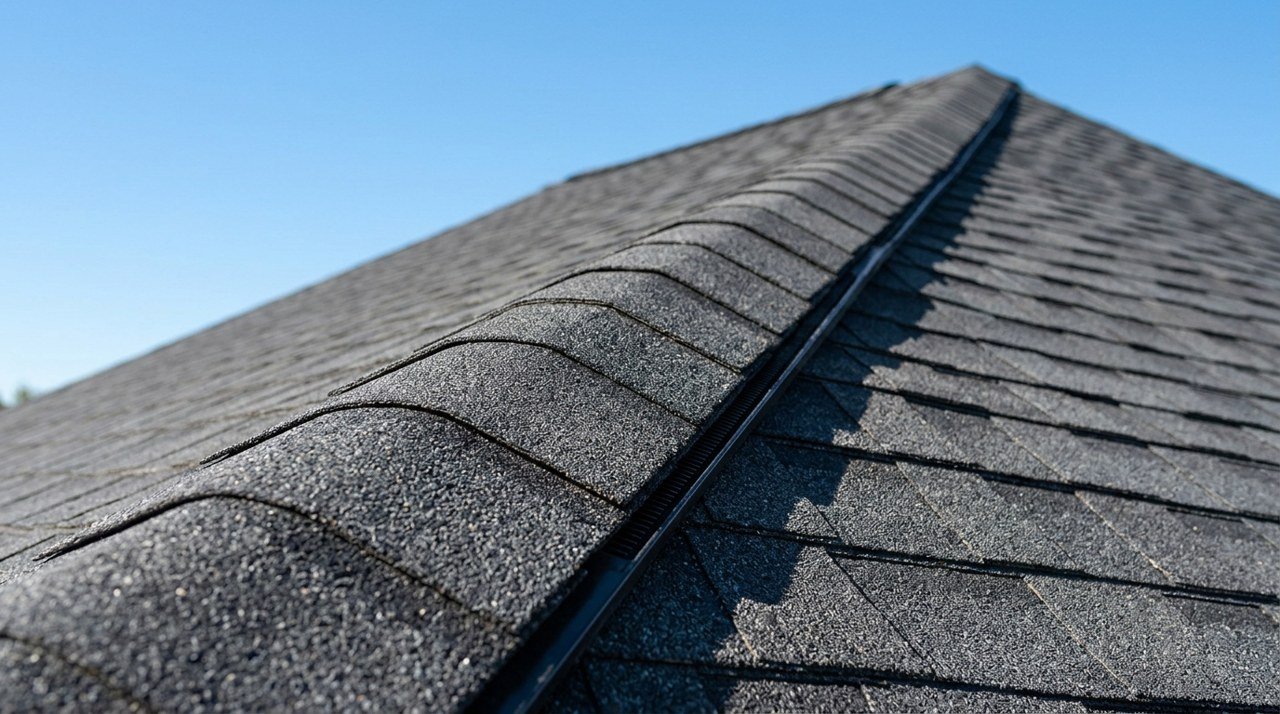
2026 Roof Cap Repair & Replacement Cost: Repairing wind-blown roof ridge cap shingles averages $350 to $950, while replacing the entire ridge cap and installing a continuous baffled ridge vent across a 50-to-80-foot roof peak runs $650 to $1,650 (roughly $8 to $15 per linear foot installed). Always specify factory-molded hip & ridge cap shingles rather than cut 3-tab strips.
Roof Cap & Ridge Vent Pricing Breakdown (2026)
| Roof Cap Scope | 2026 Installed Cost | Wind Rating | Key Durability Benefit |
|---|---|---|---|
| Spot Ridge Cap Blow-Off Repair (Up to 15 ft) | $350 – $750 | 110 – 130 mph | Stops water entering exposed peak nails immediately |
| Full Ridge Cap Replacement (No Vent Change) | $600 – $1,200 | Up to 130 mph | Replaces brittle, cracked peak shingles on hips & ridges |
| Continuous Baffled Ridge Vent + High-Profile Cap | $850 – $1,800 | 110 – 130 mph | Cuts summer attic heat 15°F–25°F & stops winter condensation |
| Standing Seam Metal Ridge Cap + Z-Closure | $1,200 – $2,600 | 140+ mph | Matches concealed-fastener metal roof panels seamlessly |
Why Factory Hip & Ridge Caps Beat Cut 3-Tab Shingles
- Thick Folded SBS / Fiberglass Core: Cheap roofers often slice standard 3-tab shingles into three pieces to cap roof ridges. Those cut strips crack along the bent center crease within 5–8 winters, whereas factory-built hip & ridge caps (like GAF TimberTex or Owens Corning DecoRidge) use flexible SBS-modified asphalt engineered to bend cleanly over the peak.
- Never Mix Box Vents or Attic Fans With a Ridge Vent: Installing a continuous ridge vent on a roof that also has spinning gable fans or static box vents creates a “short-circuit” airflow loop that pulls rain/snow into the ridge instead of drawing cool air from your soffit eaves!
- Longer Nails Required Over Ridge Vents: Standard 1¼-inch roofing nails miss the wood deck completely when nailed through a raised plastic ridge vent; insist on 2½-inch to 3-inch galvanized ring-shank nails.
Frequently Asked Questions
How can I tell if my roof ridge cap needs replacing?
From the ground with binoculars, look for missing cap tabs after windstorms, exposed shiny nail heads along the peak, cracked dark creases down the middle of the ridge, or curling corners that catch wind gusts.
Chimney Caps vs. Roof Ridge Caps
Note that homeowners sometimes search “roof cap” when referring to a stainless-steel chimney rain cap ($250–$650 installed) that keeps birds, squirrels, and rainwater out of your fireplace flue — check both your roof peak ridge caps and chimney cap during annual autumn roof inspections. If a storm blows off ridge cap tabs, tarping or patching the exposed peak within 24–48 hours prevents attic decking rot, ceiling drywall stains, and mold growth along roof trusses. Always verify that your roofing contractor matches the exact shingle color, algae-resistant granule blend, and manufacturer ridge-cap profile so your roof keeps uniform curb appeal and full warranty protection. Having your roofer inspect chimney flashing, plumbing vent boots, and valley metal during the same ridge-cap visit saves a separate $250 minimum service-call trip charge. Always confirm in writing that your roofer installs galvanized ring-shank nails of proper length over baffled ridge vents so high winds cannot lift the cap.
2026 Ridge Cap Shingles and Roof Venting Cost Breakdown
Ridge cap shingles sit along the peak and hips of your roof, bending over the sharpest angles where standard flat shingles would crack. Because ridge caps take direct sun, wind uplift, and thermal cycling, they often wear out 5 to 10 years earlier than the field shingles below them—making targeted ridge repair or replacement one of the highest-ROI roof maintenance jobs.
2026 Material and Installation Prices per Linear Foot
On an average gable or hip roof with 60 to 100 linear feet of ridge, 2026 pricing splits sharply between full-roof add-ons and standalone service calls:
- Cut 3-Tab Caps vs. Pre-Formed High-Profile Caps: Basic cut 3-tab cap strips run $1.50 to $2.50 per linear foot for materials, while thicker pre-formed architectural or Class 4 ridge caps cost $3.00 to $7.00 per linear foot.
- Standalone Ridge Cap Replacement: Expect $8 to $16 per linear foot installed, or roughly $600 to $1,400 for a 60-to-80-foot ridge, factoring in minimum contractor mobilization fees ($450 to $750).
- Adding or Replacing a Continuous Ridge Vent: Installing a baffled external-baffle ridge vent beneath new ridge caps adds $4 to $9 per linear foot (materials plus cutting back the decking slot), bringing a standalone 60-foot vented ridge project to roughly $1,100 to $2,100.
Attic Ventilation Rules: Sizing and Airflow Traps
Proper ridge venting requires balanced intake and exhaust calculated by Net Free Area (NFA). Building codes generally require 1 square foot of NFA per 150 square feet of attic floor—or 1:300 when a vapor retarder is present and 50% of ventilation sits high at the ridge while 50% enters low at the soffit eaves.
- Never Mix Exhaust Types: Combining a continuous ridge vent with gable-end vents or powered attic fans short-circuits airflow—the fan pulls air through the nearby ridge slot rather than the soffits and can suck rain or snow into the attic.
- Use 3-Inch Ring-Shank Nails: Standard 1¼-inch roofing nails cannot penetrate a raised ridge vent and two layers of thick cap shingle into the roof sheathing; specify 2½- to 3-inch corrosion-resistant nails.
Warning Signs Your Ridge Caps Need Replacement
Inspect along the roofline from the ground with binoculars each spring for curled edges, vertical fiberglass splits down the center fold, popped nail heads, or dark asphalt streaks where protective granules have washed away.
Recommended U.S. Cost & Coverage Guides
- Geothermal Heat Pump Cost in 2026: Ground-Source Installation & Federal Tax Credits
- Septic Tank Replacement Cost in 2026: Leach Field, Percolation Test & Tank Size Pricing
- Commercial HVAC Chiller Retrofits & Variable Refrigerant Flow in 2026: Cost per Ton, Utility Rebates, and Equipment Leasing
- Walk-In Tub and Hydrotherapy Shower Costs in 2026: Aging-in-Place Modifications, Medicare Deductions, and Top Brands